

That standard epoxy kit from the big-box store isn't just a bad investment; it's a guaranteed failure in the Florida climate. You've likely seen the symptoms of a failing floor already. Bubbling surfaces, yellowed finishes, and the dreaded "hot tire pickup" where your floor literally peels away under your car are all too common. Finding the best garage floor coating for Florida humidity requires moving past temporary bandages and looking toward a structural cure.
We understand the frustration of watching a home improvement project turn into a peeling mess as the concrete "sweats" during a humid July afternoon. It's a chronic issue that demands a specialized professional response. This guide reveals why traditional coatings can't survive our state's unique environmental stress and explains how polyaspartic technology provides the permanent cure. We'll examine the technical breakdown of moisture-driven failure, the impact of 2026 industry standards, and the methodical process required to achieve a serene, high-end garage transformation.
Key Takeaways
- Understand how Moisture Vapor Transmission acts as a silent catalyst for coating failure in Florida's porous concrete slabs.
- Learn why polyaspartic technology is the best garage floor coating for Florida humidity due to its superior flexibility and rapid one-day cure time.
- Discover the chemical mechanics behind hot tire pickup and how to prevent South Florida road heat from delaminating your floor.
- Explore the essential diagnostic steps, including professional moisture testing and industrial diamond grinding, that ensure a permanent bond.
- Identify the critical differences between a temporary epoxy bandage and a professional-grade polyaspartic prescription for long-term durability.
The South Florida Humidity Factor: Why Garage Floors Fail
Florida concrete isn't the solid, impermeable barrier it appears to be. It's a porous, capillary network that behaves exactly like a sponge. In the subtropical climate of Davie and Miami, your garage floor is constantly under siege from moisture moving in two directions. While surface humidity is a visible nuisance, the real threat to your investment remains invisible. Selecting the best garage floor coating for Florida humidity requires more than just picking a color; it requires a diagnostic understanding of your slab's moisture levels.
The Science of Moisture Vapor Transmission
Groundwater doesn't just sit beneath your home; it moves. Because South Florida sits on a high water table, the soil beneath your garage slab is often saturated. Through a process called capillary action, the concrete draws this liquid upward. As the sun beats down on your garage, it creates a vacuum effect that pulls this moisture through the slab and releases it as a gas. Moisture Vapor Transmission (MVT) is the upward pressure of water vapor that "pops" weak surface bonds. Professionals often utilize Epoxy moisture control systems as a specialized primer to stabilize the slab before the final aesthetic layers are applied. Without this intervention, the pressure becomes so intense that it forces the coating to detach from the substrate entirely.
This "sweating slab" syndrome is a chronic condition in South Florida. When you see dark spots on your bare concrete or feel a damp film on the surface during a humid morning, you're witnessing MVT in action. Standard DIY kits aren't designed to handle this hydraulic force. High humidity also interferes with the chemical cross-linking required for a coating to cure. If the air is too thick with moisture, the resin remains tacky or develops a cloudy, "blushed" finish that never fully hardens.
Signs Your Current Floor Coating Is Failing
Identifying the symptoms of a failing floor early can prevent a total structural collapse of the finish. You don't need a degree in chemistry to spot the warning signs. Look for these specific indicators of distress:
- Bubbles and Blisters: Small, localized domes in the finish indicate that MVT has already broken the bond in those areas.
- Alligatoring: This pattern of cracked, scaly lines suggests the coating has lost its flexibility and can no longer expand with the concrete during temperature shifts.
- Hot Tire Pickup: If your floor peels away exactly where your car tires rest, the bond was never deep enough to resist the heat and suction of your vehicle.
It's vital to distinguish between surface scratches and structural bond failure. A scratch is a cosmetic blemish; a peel is a systemic failure. Furthermore, if your floor has turned an unsightly shade of amber, you're dealing with UV damage. Traditional epoxies aren't light-stable. In the intense Florida sun, they yellow and become brittle, leading to the best garage floor coating for Florida humidity being a polyaspartic system rather than a basic epoxy. This diagnostic approach ensures that your floor transformation isn't just a temporary bandage, but a permanent cure.
Polyaspartic vs. Epoxy: The Right Treatment for Florida
Choosing between epoxy and polyaspartic technology is often the difference between a temporary surface fix and a permanent structural solution. For decades, epoxy was the standard choice for residential garages. However, it acts as a rigid "cap" that simply sits on top of the concrete. In our subtropical environment, this lack of integration leads to failure. Polyaspartic coatings represent a specialized intervention. They create a flexible bond that fuses deep into the concrete pores, making them the best garage floor coating for Florida humidity.
The diagnostic difference between these two materials is most apparent during the installation process. Efficiency is a hallmark of a professional installation. Traditional epoxy systems require a lengthy curing period, often leaving your garage out of commission for three to five days. Polyaspartic technology offers a rapid cure time. A professional team can complete the installation in a single day, allowing you to return your vehicles to the space within 24 hours. This streamlined process minimizes the disruption to your household routine while providing a superior finish.
Why Epoxy "Yellows" in South Florida
Intensity is the defining characteristic of the Florida sun. Traditional epoxy resins are chemically susceptible to ultraviolet radiation. When exposed to sunlight through open garage doors or windows, the polymer chains begin to break down. This chemical degradation leads to "ambering," a process where the floor takes on a sickly yellow hue. There is a clear scientific basis for humidity's impact and UV exposure on polymer coatings, which confirms that standard epoxies lack the light-stability required for our region. Polyaspartic systems are 100% UV stable. They maintain their clinical clarity and vibrant color for decades, regardless of how much sun hits the slab. This stability is especially critical for full-flake systems, where yellowing can distort the carefully selected color profile of your floor.
Flexibility vs. Brittleness
Concrete is a dynamic material. It expands and contracts as temperatures shift from the midday heat to the evening cool. Because epoxy is inherently brittle, it cannot move with the substrate. This rigidity leads to hairline fractures and eventual delamination. Polyaspartic systems possess "elastic memory" and superior elongation properties. They are designed to stretch and move with the concrete without cracking. This flexibility also provides a high degree of impact resistance. While a dropped wrench might chip a brittle epoxy floor, a polyaspartic coating absorbs the energy of the impact. If you are ready to move from a dysfunctional space to a high-end environment, you can consult with a specialist to determine the exact requirements for your specific slab. This focus on long-term durability ensures that your garage remains a clean, orderly, and functional extension of your home.
Solving the "Hot Tire Pickup" Epidemic in Davie
Hot tire pickup is a localized failure where your vehicle's tires chemically bond to the garage floor. In Davie, asphalt temperatures frequently reach levels that would melt standard consumer products. When you pull into your garage after a commute, that heat transfers directly into the slab. If your coating isn't heat-stable, the bond weakens instantly. This is why a specialized approach is the only way to find the best garage floor coating for Florida humidity and high-heat environments.
The failure often starts beneath the surface. Before applying any "cure," a technician must utilize professional moisture testing methods to ensure the substrate won't reject the coating. When moisture vapor transmission (MVT) meets high heat, the result is a catastrophic delamination that leaves your concrete exposed. This isn't just a cosmetic blemish; it's a systemic failure of the floor's protective layer.
How Heat Weakens Standard Store-Bought Kits
Standard store-bought kits are usually water-based epoxies with a low glass transition temperature. They soften under the intense thermal energy of a modern SUV. Professional coatings are engineered to withstand tire temperatures exceeding 140 degrees. This thermal stability prevents "plasticizer migration," a process where chemicals from the tire rubber leach into and liquefy the floor finish. Once the coating softens, the weight of the vehicle creates a suction effect. As you drive away, the tire literally pulls the coating off the concrete.
The Polyaspartic Defense
Polyaspartic systems utilize advanced cross-linking chemistry. This creates a dense, non-porous shield that refuses to bond with tire rubber. It's a critical defense for high-traffic Broward County garages. Unlike epoxy, which remains susceptible to heat-softening for years, polyaspartic creates a permanent, heat-resistant barrier. You can read more about real-world performance in these Polyaspartic floor coating reviews. Choosing the best garage floor coating for Florida humidity means investing in a material that treats heat as a minor variable rather than a fatal threat. This transition from a dysfunctional space to a high-end environment requires a finish that stands up to the daily rigors of Florida driving.
The Diagnostic Process: Professional Installation Steps
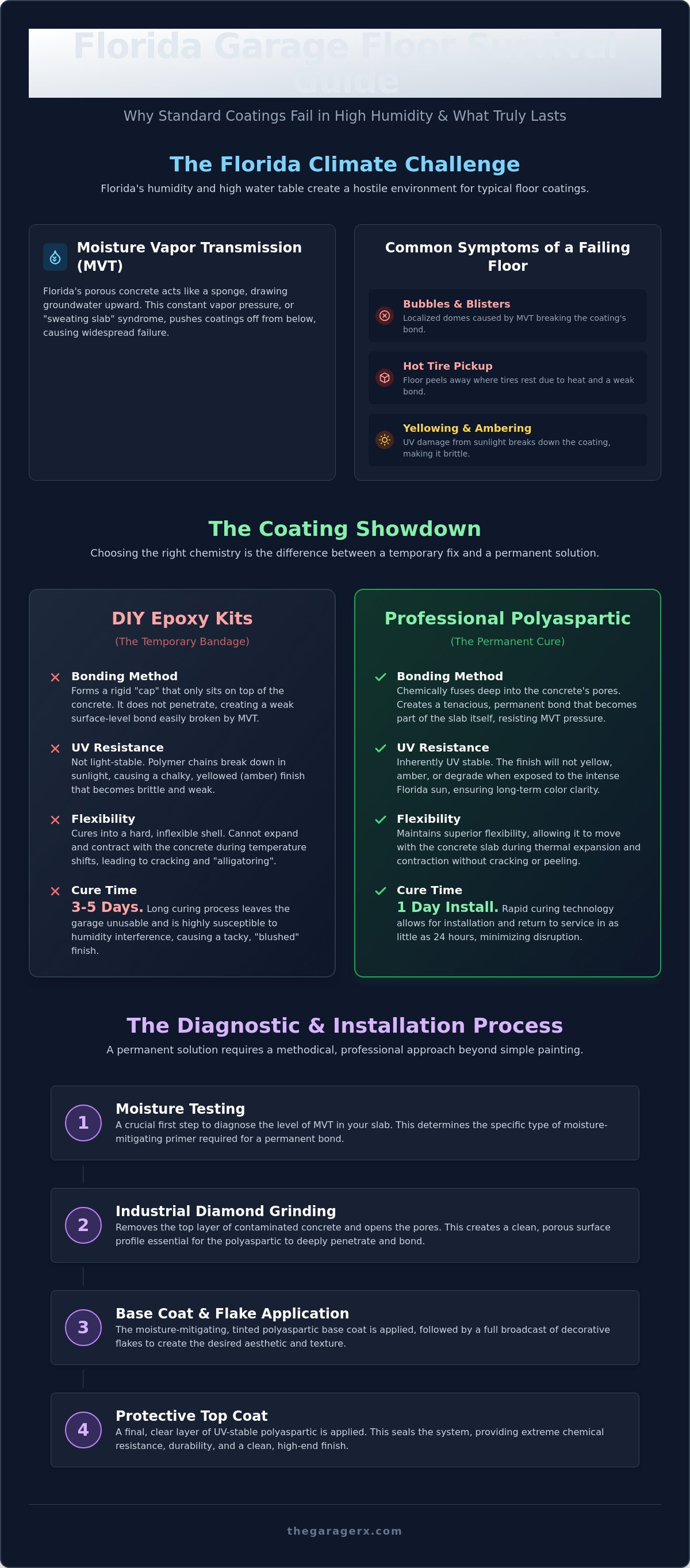
A high-performance floor is the result of a methodical, multi-stage procedure. We treat every garage as a unique case requiring a specific plan of action. This disciplined approach ensures that the bond between the concrete and the coating is permanent. When searching for the best garage floor coating for Florida humidity, the quality of the preparation is just as critical as the chemistry of the topcoat itself. Our installation process follows five essential steps to ensure a clinical finish.
- Diagnostic Moisture Testing: We measure the slab's internal humidity levels to confirm it's ready for treatment.
- Industrial Diamond Grinding: We use heavy-duty equipment to open the concrete pores, achieving a Concrete Surface Profile (CSP) of 2 or 3.
- Crack and Pit Repair: High-strength menders are applied to resolve any structural imperfections or "alligatoring" in the slab.
- Base Coat and Flake Broadcast: We apply a moisture-mitigating base and broadcast decorative flakes to full refusal for maximum durability.
- Polyaspartic Topcoat: The final layer provides a clinical, high-gloss shield that resists UV rays and chemical spills.
Why Diamond Grinding Trumps Acid Washing
Acid etching is a common shortcut in DIY kits that frequently leads to catastrophic failure in the South Florida climate. Acid washing relies on a chemical reaction to roughen the surface, but it often fails to penetrate deeply enough into humid concrete. It also introduces more water into a slab that is likely already struggling with moisture. Mechanical diamond grinding is the only reliable method for removing "laitance," which is the weak, milky layer of cement dust on the surface. This process creates a "velcro" texture that allows the coating to fuse with the concrete. Without this mechanical profile, even the best garage floor coating for Florida humidity will eventually delaminate.
Moisture Remediation Strategies
If a slab shows high levels of moisture vapor transmission during our initial check, we prescribe a specialized moisture-blocking primer. This creates an impermeable barrier that prevents ground moisture from pushing the coating off the floor. We don't believe in a one-size-fits-all solution. Instead, we select the specific base coat based on the health of your concrete. Understanding the nuances of different materials is vital, which is why we've detailed the options in our high-performance epoxy coating for garage floor guide. This diagnostic precision ensures your floor remains a serene, high-end environment for years to come. If you're ready to transform your dysfunctional garage into an organized retreat, schedule your professional diagnostic consultation today.
The Garage RX: Your Specialist for South Florida Garage Health
Generic home improvement services often overlook the unique pathology of Florida concrete. In Davie and Miami, a one-size-fits-all application is a temporary fix that leads to future frustration. We treat your garage as a clinical environment that requires a precise, professional prescription. Achieving the best garage floor coating for Florida humidity is a vital foundation, but it's only the first phase of a total spatial recovery. Our team focuses on the long-term health of your home by addressing the environmental chaos that keeps your garage from reaching its full potential.
Efficiency is a core component of our practice. We understand that your time is valuable, which is why we've streamlined our installation process to minimize disruption. Our commitment to 1-day installations means your space moves from dysfunctional to high-end in a single visit. By utilizing industrial-grade polyaspartic technology, we provide a finish that offers lifetime durability and resistance to the specific moisture issues found in South Florida. This isn't just general labor; it's a specialized intervention designed to restore order and beauty to your property.
A Holistic Approach to Garage Transformation
A new floor is the essential starting point for a custom garage organization system. Once the slab is protected and sealed, the focus shifts to maintaining that clean, orderly environment. We specialize in pairing your high-performance floor with custom garage cabinets that elevate your storage capacity. By integrating garage slatwall systems and overhead racks, we move items off the ground and onto the walls. This vertical storage strategy keeps your new floor visible and remarkably easy to clean. The synergy between a clinical-grade floor and a fully organized storage system creates a serene space that finally feels like a true extension of your home.
Schedule Your Garage Diagnostic Today
The journey toward a transformed garage begins with an expert consultation. During a professional diagnostic visit in Broward County, we evaluate the health of your concrete and identify any underlying moisture issues. We believe in transparent, all-inclusive communication regarding project scope and costs. There are no hidden surprises or unexpected expenses at the end of our process. You'll receive a clear plan of action that outlines exactly how we'll achieve the best garage floor coating for Florida humidity in your specific space. Don't let a dysfunctional garage continue to be a source of stress. Take the first step toward relief and get your free garage floor diagnostic from The Garage RX. Our detail-oriented experts are ready to help you reclaim your space with a permanent, high-end solution.
Secure Your Permanent Garage Transformation
Your garage floor shouldn't be a source of frustration or a recurring maintenance task. By moving beyond temporary bandages and investing in polyaspartic technology, you ensure long-term durability in our challenging climate. We've examined how diagnostic moisture testing and industrial-grade preparation prevent the delamination issues that plague standard DIY projects. This methodical approach identifies the best garage floor coating for Florida humidity based on your slab's specific health profile.
The Garage RX specializes in these South Florida humidity challenges. We combine Red Dot-level design aesthetics with the technical precision required for a permanent bond. Our 1-day professional installation process minimizes disruption while maximizing the functional beauty of your home. It's time to reclaim your space from environmental chaos and enjoy the relief of a serene, high-end environment.
Book Your Free Garage Diagnostic & Estimate and take the first step toward a total spatial recovery. Your high-performance floor is the foundation for a more organized lifestyle.
Frequently Asked Questions
Is polyaspartic really better than epoxy for Florida humidity?
Yes, polyaspartic technology is significantly more effective than traditional epoxy for the Florida climate. While epoxy forms a rigid and brittle layer, polyaspartic creates a flexible bond that fuses with the concrete. This flexibility allows the coating to expand and contract during temperature shifts without cracking. It's the best garage floor coating for Florida humidity because it resists moisture vapor transmission and won't yellow under intense subtropical UV exposure.
How long does it take to install a garage floor coating in Davie?
A professional installation typically takes exactly one day to complete. Our streamlined process utilizes rapid-curing polyaspartic materials that allow for a quick turnaround. You can usually walk on the surface within a few hours and return your vehicles to the garage after 24 hours. This efficiency minimizes the disruption to your household routine, moving your space from a dysfunctional state to a high-end environment in a single visit.
Can I apply a polyaspartic coating myself with a DIY kit?
Applying polyaspartic coatings is not recommended for DIY enthusiasts. These professional-grade materials have an extremely fast cure time, often hardening within minutes of mixing. Amateurs frequently struggle with pot life issues, leading to uneven finishes and wasted product. Additionally, a permanent bond requires industrial diamond grinding to achieve the necessary surface profile, a step that consumer-grade acid etching kits simply cannot replicate on a humid slab.
Does the high water table in South Florida cause garage floors to peel?
Yes, the high water table is a primary driver of coating failure in South Florida. Because concrete is porous, it draws moisture upward from the saturated soil beneath the slab. This moisture vapor transmission creates hydraulic pressure that can pop weak surface bonds. This is why polyaspartic is the best garage floor coating for Florida humidity, as we utilize specialized moisture-mitigating primers to block this vapor and ensure a permanent, failure-proof bond.
What is the best way to clean a polyaspartic garage floor?
Cleaning a polyaspartic floor is remarkably simple due to its non-porous finish. Most dirt and debris can be removed with a soft-bristled broom or a leaf blower. For a deeper clean, use a mop with a mixture of warm water and a small amount of mild, pH-neutral soap. Avoid using harsh acidic cleaners or citrus-based products, as these can dull the clinical, high-gloss shine over time during your maintenance routine.
Will my garage floor be slippery when wet from rain or humidity?
No, a professionally installed flake system provides excellent slip resistance. The full broadcast of decorative chips creates a textured surface that offers traction even when the floor is damp from rain or high humidity. We can also integrate specialized anti-slip additives into the final polyaspartic topcoat for added safety. This ensures your garage remains a secure and functional space regardless of the frantic energy of a Florida summer storm.
Does The Garage RX offer a warranty against hot tire pickup?
Our polyaspartic systems are specifically engineered to prevent the chemical bonding that causes hot tire pickup. While you should review the specific terms of your service agreement during your consultation, our focus on industrial-grade materials ensures your floor resists delamination from heated tires. This diagnostic approach treats the root cause of the hot tire pickup epidemic common in Davie, providing a durable, long-term solution for your home.
Can you coat a garage floor if the concrete is already cracked?
Yes, we can successfully coat concrete that has existing cracks or pits. Our restoration process includes a critical step where we utilize high-strength menders to bridge and seal structural imperfections. Once these repairs are cured and ground flush with the slab, the coating is applied over a smooth, unified surface. This intervention not only hides the damage but also prevents the cracks from expanding further under the daily stress of Florida heat.