

Can a worn garage floor be renewed without covering up a problem that could undermine the finish? For garage floor resurfacing Davie homeowners need more than a fresh coating: stains, cracks, uneven areas, and moisture concerns all deserve a closer look first. In South Florida’s humid climate, it’s understandable to wonder whether concrete is ready for a new surface. Start by assessing the slab, not by rushing to coat it.
This guide explains how to assess common signs of wear, why surface preparation matters, and how epoxy and polyaspartic coatings can fit into a project. You’ll learn what can affect a floor’s suitability for coating and how the concrete’s condition should inform the plan. The Garage RX installs polyaspartic and epoxy garage floor coatings in Davie, with project scope tailored to the existing floor.
Key Takeaways
- Garage floor resurfacing Davie projects start with assessing the existing slab, not assuming every worn floor needs the same solution.
- Stains, cracks, uneven areas, and moisture concerns are useful clues, but visible signs alone don’t determine the right treatment.
- Compare localized repair, broader surface renewal, and coating over prepared concrete to understand which path may suit your floor and priorities.
- Preparation is a central part of a coating plan, helping ready the concrete for the selected finish.
- Before planning your project with The Garage RX, note what you see on the floor so the discussion can focus on your garage’s specific needs.
Garage Floor Resurfacing in Davie: What It Means for an Existing Slab
A garage floor can look tired without needing a new concrete slab. Resurfacing describes a project to renew the existing floor, often by addressing its condition and applying a suitable finish. Replacing the slab is a different, more extensive scope. The right approach depends on what the concrete can support, so a coating plan should begin with an assessment rather than assumptions.
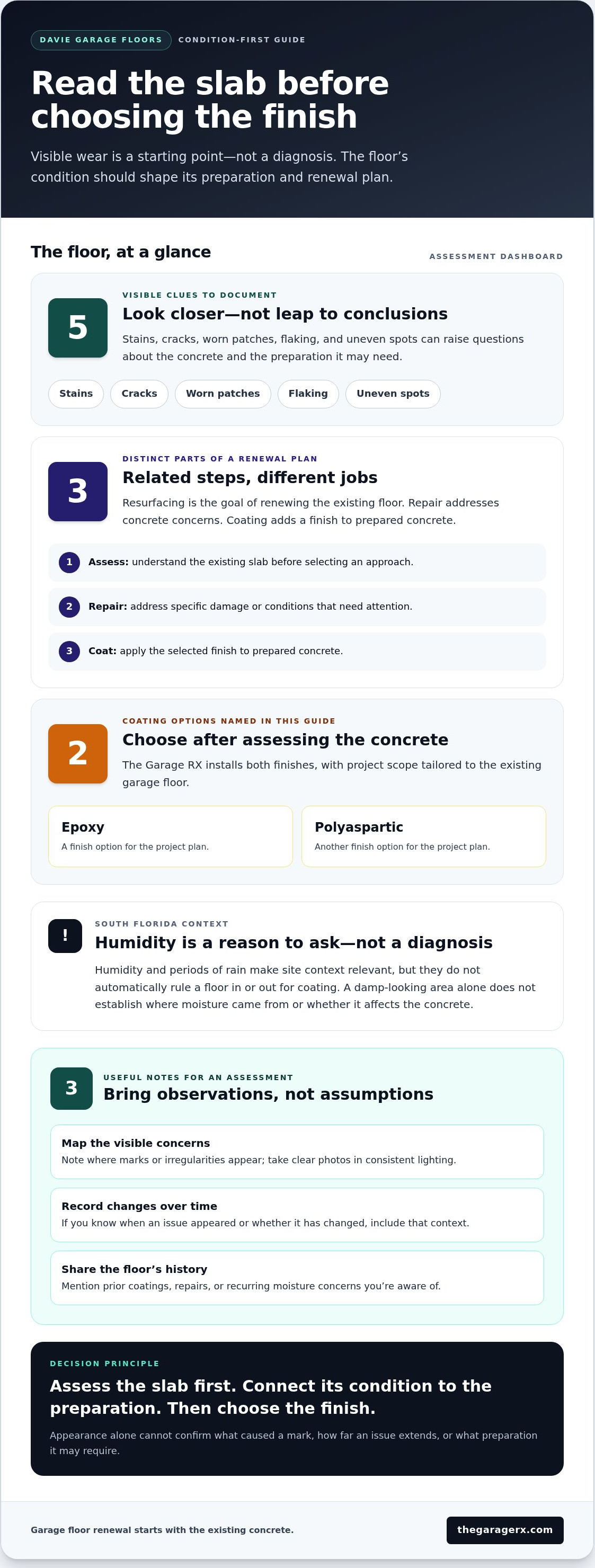
Resurfacing renews the existing floor; repair addresses concrete problems; coating adds a finish to prepared concrete. These steps can be part of one renewal plan, but they aren’t interchangeable. Assessing the floor helps establish what work is needed before a finish is selected.
Resurfacing, repairing, and coating: how the terms differ
Resurfacing is the broad goal of improving an existing floor, not one universal installation method. Repair focuses on specific damage or conditions in the concrete that need attention before finishing. Coating is the finish applied as part of the renewal plan. The Garage RX installs polyaspartic and epoxy floor coatings, with project scope tailored to the existing garage floor.
The sequence matters. Applying a finish without accounting for the slab’s condition can leave important concerns unaddressed. A sound plan connects visible signs of wear with the preparation needed before coating. For context on ways concrete surfaces may be maintained, see this overview of concrete pavement restoration techniques. A garage floor has its own requirements, so the overview isn’t a substitute for assessing the specific slab.
Signs your Davie garage floor needs professional assessment
Use visible changes as prompts to look closer, not as a diagnosis. Stains may point to areas that need attention, while cracking, worn patches, flaking, or uneven spots can raise questions about the concrete and the best finish. Appearance alone can’t show what caused a mark or crack, how far an issue extends, or what preparation it may require. A professional review connects those observations to a project-specific plan.
- Map the visible concerns. Note where stains, cracks, worn areas, or irregularities appear, and take clear photos in consistent lighting.
- Record changes over time. If you know when an issue appeared or whether it has changed, include that context in your notes.
- Share the floor’s history. Mention prior coatings, repairs, or recurring moisture concerns if you’re aware of them. These details help frame the assessment.
For garage floor resurfacing Davie homeowners should treat the slab as the starting point for decisions about preparation and finish. Bring your observations to a project discussion with The Garage RX, a Davie-based garage transformation company serving South Florida. A clear picture of what you see and what you know about the floor’s history helps move the conversation from cosmetic concerns toward a considered renewal plan.
Why Davie Garage Concrete Needs a Condition-First Resurfacing Plan
A coating plan should fit the concrete beneath it. Two garage floors can show similar wear but call for different preparation because their histories and underlying conditions may differ. In Davie, humidity and rain exposure are useful context for an assessment, not proof that moisture is damaging a particular slab. A condition-first review helps define the work instead of relying on appearance alone.
Assess the slab before choosing the finish: visible symptoms are clues, not a complete explanation. This keeps decisions about preparation and coating tied to the actual floor, rather than assumptions about what a stain or crack means.
How humidity and moisture factor into a South Florida floor assessment
South Florida’s humid conditions and periods of rain make site context relevant, but they don’t automatically rule a floor in or out for coating. The garage environment and concrete condition are important considerations when planning preparation and coating steps. If an assessment identifies a moisture-related concern, the project scope may need to account for it before a finish is chosen.
Think of humidity as a reason to ask better questions, not as a diagnosis. A damp-looking area, for example, doesn’t establish where moisture came from or whether it affects the concrete. Technical conclusions about testing or remediation should be based on an expert evaluation of the specific site, not a general claim about Davie’s climate.
What cracks, stains, and worn coatings may indicate
A crack is visible evidence of a separation, but its appearance alone can’t establish its cause or whether it’s changing. A stain may come from a spill or another source, while peeling or worn coating can reflect the condition of the old finish or the surface beneath it. Prior coatings and repair history help frame the assessment, but neither confirms the underlying cause on its own.
Photos are useful for documenting what you see, but they can’t show every factor that may affect the project. Note the location and approximate size of cracks, where stains recur, and whether coating is lifting or simply worn. Include any known history of previous finishes, repairs, or water exposure. These details give a professional a clearer starting point for examining the floor in person.
- Record patterns. Note whether a concern is isolated or appears in several parts of the garage.
- Describe changes. Share whether you’ve noticed a crack or worn area changing over time.
- Gather history. List prior coatings, repairs, or recurring dampness you’re aware of.
For garage floor resurfacing Davie homeowners should treat these observations as a project brief, not a self-diagnosis. A professional assessment connects surface clues and site conditions to preparation and coating steps suited to the existing slab. To discuss your floor’s condition and possible renewal path, talk with The Garage RX.
Repair, Resurface, or Recoat? Compare the Right Path for Your Davie Garage
A worn floor doesn’t automatically call for the same fix from one garage to another. A small damaged area, a floor that needs broader renewal, and sound concrete ready for a new finish are different starting points. For garage floor resurfacing Davie homeowners can use this comparison to organize the options, then match the next step to the slab’s condition, its existing finish, and what they want from the space.
| Path | What it addresses | When it may fit |
|---|---|---|
| Localized repair | A specific area of concrete that needs attention. | When assessment identifies a limited concern that should be addressed before finishing. |
| Surface renewal | A broader plan to improve the existing floor, with scope guided by its condition. | When the goal is to renew the floor and the slab requires more than a finish alone. |
| Coating over prepared concrete | A new finish applied as part of a coating project. | When the concrete and existing surface are suitable for the preparation and coating plan. |
When concrete repair belongs in the resurfacing scope
Cracks, worn patches, or other damaged areas may need attention before a coating is applied. That doesn’t mean every crack calls for the same response. Its location, appearance, surrounding concrete, and the floor’s overall condition all inform the assessment. The project scope should identify which areas need attention and how that work relates to preparation and finishing. Treat repair as a decision based on the floor, not a one-size-fits-all step.
When a new coating is part of the floor-renewal solution
If the assessment supports a coating project, a new finish can form the visible final layer of the renewal plan. The Garage RX installs polyaspartic and epoxy floor coatings, with project scope tailored to the existing garage floor. The choice between these coating categories should follow the slab review and the homeowner’s priorities, rather than assumptions based on a name alone. For more coating-specific context, read this polyaspartic floor coating durability guide and epoxy garage floor coating guide.
Start with the floor’s current state, including any previous coating, repairs, or recurring concerns. Then consider your priorities: renewing the overall appearance, addressing specific damage, or adding a finished coating to prepared concrete. Those goals help shape a useful project discussion, but the slab assessment determines which approach is appropriate.
A thoughtful plan connects preparation and finish instead of treating them as separate cosmetic choices. To discuss a floor transformation tailored to your garage, connect with The Garage RX.
How Professional Garage Floor Resurfacing Moves from Assessment to Finish
A professional floor-renewal project follows a deliberate sequence. Each stage informs the next, from understanding the slab to reviewing the finished surface. Preparation and any repair needs are planned around the existing floor, while the selected coating and project scope influence how the work is carried out. This keeps the process focused on your garage instead of applying a one-size-fits-all recipe.
What happens during assessment and project planning
Planning starts with the existing slab: its visible condition, any prior coatings, areas of damage, and how you use the garage. Those details help shape the preparation scope and guide the finish selection. A floor used mainly for parking may have different priorities from one that also serves as a workshop. Recommendations should reflect the specific garage and its condition.
Thorough preparation connects the slab’s condition to the chosen finish, making it a central part of a coherent floor-renewal plan. The following sequence shows how assessment, preparation, repairs, coating, and review fit together:
- Assess the floor. Review the existing concrete, visible concerns, prior finish, and intended garage use. This establishes a practical starting point for planning.
- Plan and prepare. Set the project scope and prepare the work area and concrete for the selected coating. Preparation is part of the coating work, not an optional cosmetic extra.
- Address identified repairs. If the assessment indicates areas need attention before coating, account for that in the project plan. The work required depends on the condition and location of the concern.
- Apply the finish. Install the selected floor coating as part of the planned renewal. The Garage RX offers polyaspartic and epoxy floor coatings, with scope tailored to the existing garage floor.
- Review the completed work. Go over the finished surface and the project’s use guidance so you understand what was completed and what to follow before returning the garage to use.
Preparing the garage before floor work begins
Before installation, clear the work area according to the project plan. Make a list of items that need to be moved, including vehicles, tools, and anything stored on the floor. If built-in or bulky items affect access, raise them during planning so the work area and scope can be discussed clearly. A well-prepared space helps keep the project organized.
Coordinate household access and scheduling ahead of the work. Arrange another place for vehicles or activities that depend on the garage while the floor project is underway. Don’t assume a standard return-to-use time: duration and access depend on the floor’s condition, the work included, and the selected system. Follow the project-specific guidance for when the surface can be used again.
For a project-specific plan, describe the garage’s condition and how you use the space when discussing garage floor resurfacing Davie. The Garage RX installs garage floor coatings and can help map the next steps from assessment through finish. Plan your garage floor project.
Plan Your Garage Floor Resurfacing Project with The Garage RX in Davie
A worn garage floor is easier to plan for when you bring clear observations to the conversation. Note what you see, what you know about the floor’s history, and how you want to use the space. That information helps frame an assessment and gives the project a practical starting point. The Garage RX is a Davie-based garage transformation company serving Broward, Miami-Dade, and Palm Beach counties.
What to have ready for a project conversation
You don’t need to diagnose the concrete before discussing a project. A few straightforward notes can help describe the garage and focus the assessment on the details that matter to your household.
- Describe the layout. Share the approximate size and shape of the garage, plus any areas that are used differently, such as a storage zone or workshop space.
- Note what you see. Point out visible cracks, stains, worn areas, peeling finish, or uneven spots. Photos can help document where concerns appear, but they aren’t a substitute for assessing the floor itself.
- Share the floor’s history. Mention an existing coating, known repairs, or stains that return. If you don’t know when an issue began, simply say so.
- Explain how you use the garage. Parking, storage, projects, and daily household access can all influence what you want from a renewed floor.
These details help distinguish your priorities from the concrete’s needs. For example, a homeowner may want a cleaner-looking space, while the assessment also needs to account for the existing surface and any areas requiring attention before a finish is applied. The project scope is tailored to the existing concrete and selected coating, not assumed from the garage’s appearance alone.
Turn a worn Davie garage floor into a planned transformation
Resurfacing works best as a coordinated project: assess the slab, plan preparation, account for any repair needs, and select a finish that fits the floor and your goals. The steps inform one another. A coating choice shouldn’t be separated from the condition of the concrete it will cover.
The Garage RX installs polyaspartic and epoxy garage floor coatings. The right plan depends on the assessment and the priorities you bring to the project. In a discussion about garage floor resurfacing Davie homeowners can describe visible concerns, share the floor’s history, and outline how they hope to use the space. From there, the conversation can focus on a project-specific path to a renewed garage.
Ready to move from observations to a clear plan? Plan your garage floor project with The Garage RX.
Take the First Step Toward a More Usable Garage
A garage floor renewal can be a chance to rethink how the space should work, not just how it looks. Before planning garage floor resurfacing Davie, picture the finished garage: a cleaner-feeling place to park, a more practical area for projects, or a surface that helps the room feel orderly. That vision gives the project conversation a useful starting point.
Then turn the idea into a simple brief. What would you like to change about the space? Which floor concerns are most distracting? What do you need the garage to support day to day? Clear priorities help keep decisions focused as the floor is assessed and a suitable plan takes shape.
Your concrete doesn’t need a guesswork fix. Give it a considered next step, guided by its actual condition and the way you want to use the space. Plan your garage floor project with The Garage RX, and move closer to a garage that feels renewed and ready for what comes next.
Frequently Asked Questions
What is garage floor resurfacing, and how is it different from coating?
Garage floor resurfacing is the broader goal of renewing an existing floor, while coating describes the finish applied as part of that project. For example, if a homeowner wants to refresh a stained garage, the plan may involve assessing the concrete and preparing it before applying a new coating. The terms are related, but resurfacing can include planning and work beyond the finish itself.
Can you resurface a cracked concrete garage floor?
A cracked floor can be assessed for a renewal project, but the crack’s appearance alone doesn’t show what treatment is appropriate. A fine crack in one area and several cracks across a slab may lead to different project scopes. Share where the cracks are, whether you’ve noticed changes, and any known repair history. The assessment helps determine how the concrete should be addressed before a coating is considered.
Is garage floor resurfacing suitable for a Davie home with humidity or moisture concerns?
Humidity or a damp-looking area alone can’t determine whether a coating is appropriate. For garage floor resurfacing Davie homeowners should describe any recurring dampness, rain exposure, or moisture concerns during project planning. Site conditions and the slab need to be assessed before choosing preparation and coating steps. The findings may affect the project scope, so don’t assume climate by itself rules a floor in or out.
How long does garage floor resurfacing take?
The schedule depends on the floor’s condition, the work included, and the coating system selected. Assessment, preparation, possible repairs, application, and the time needed before the garage can be used all factor into planning. A floor with additional concerns may require a different schedule from one that’s ready for coating after assessment. Coordinate household and vehicle access around the project-specific schedule and follow the guidance provided for returning the space to use.
How much does garage floor resurfacing cost in Davie?
There isn’t one set price for every Davie garage floor project. The scope depends in part on the floor area and selected coating system, as well as what the existing concrete requires. Repairs or additional preparation can also affect the work involved. To discuss your project, share the approximate garage size and visible floor concerns so the proposed scope can reflect the actual space rather than a generic estimate.
Do I need to empty my garage before floor resurfacing?
Plan to clear the floor and work area according to the project plan, including vehicles, boxes, tools, and loose items. Before moving everything, make a quick inventory and set aside items you’ll need during the work period, such as household supplies or frequently used equipment. Discuss bulky or difficult-to-move items during planning so access expectations are clear before the scheduled work begins.
Can an existing garage floor coating be resurfaced or recoated?
The existing coating needs to be assessed before deciding whether it can remain, needs attention, or changes the preparation plan. Peeling, worn, or uneven areas are useful details to point out, and the coating’s history can help inform the review. Share any information you have about when it was installed and prior repairs. The new coating plan should account for both the old finish and the concrete beneath it.