

Could the cleaner that makes your garage slatwall look spotless also damage its finish? Dust and grime often settle in grooves and around hooks, but the safest approach to cleaning and maintaining garage slatwall depends on the panel material and its care instructions. A little caution can prevent a quick wipe-down from becoming an avoidable repair.
It’s reasonable to want clear answers about which tools and cleaners to use, especially when moisture or vigorous scrubbing could harm the panels. This guide explains how to clean slatwall gently, protect it from everyday wear, and build a simple routine that keeps accessories and storage areas in good condition. You’ll also learn what signs may point to panel damage or a layout that no longer fits your needs, and when a professional assessment could help you plan the next step.
Key Takeaways
- Match your cleaning approach to the panel material and its care guidance to help protect the finish.
- Start with dry dust removal, then use a gentle, panel-compatible method for grime around grooves and accessories.
- Build a simple routine for cleaning and maintaining garage slatwall, and keep an eye out for visible moisture or wear.
- Check unfamiliar marks discreetly before trying a cleaner, and avoid assuming one treatment works for every stain.
- Learn to spot when loose fittings, damaged panels, or an inefficient layout call for more than cleaning.
Why regular garage slatwall cleaning protects an organized space
Garage slatwall turns open wall space into flexible storage. Panels have horizontal grooves that accept compatible hooks, shelves, and baskets, helping keep tools, sports gear, and household items visible and accessible. The Slatwall overview describes the system and common materials, but your specific panel’s construction and finish determine its care needs.
Dust in the grooves and everyday grime around frequently used accessories are normal. They don’t mean the wall needs aggressive scrubbing or strong chemicals. A gentle, material-aware approach helps keep the storage area tidy while avoiding unnecessary wear. As part of cleaning and maintaining garage slatwall, take a moment to inspect the system, too. A loose hook, sticky residue, lifting edge, or crack may need attention beyond routine cleaning.
Think of regular care as a quick condition check, not just a cosmetic reset. Spotting a change early gives you a chance to check the panel and accessory instructions before loading the area again. If you find visible damage, cleaning alone can’t determine whether the panel is still suitable for use.
What should you check before cleaning garage slatwall?
First, identify the panel material and finish from installation records or manufacturer information. Don’t assume panels that look alike can be cleaned the same way. Move nearby items out of the work area, then look for cracks, lifting edges, or fittings that feel loose. Try your gentle cleaning method on a discreet spot and check for any change before proceeding across the wall.
How often does garage slatwall need cleaning?
There’s no single schedule that suits every garage. Inspect the panels periodically, then clean when dust or visible grime starts to build up. A wall near frequent projects or everyday activity may need attention sooner than one that sees little use. Let what you see guide the routine, and check the manufacturer’s instructions for any care interval recommended for your installed panels.
How to clean garage slatwall safely, step by step
A careful sequence keeps dust from turning into damp residue and limits moisture around panel grooves. Before starting, confirm the panel’s material and finish and check its manufacturer’s care instructions. A complete guide to slatwall cleaning can offer additional general steps, but the instructions for your installed panels should take priority.
What tools and supplies are appropriate for slatwall?
Keep supplies simple: use a soft microfiber cloth or a soft-bristle brush for dust, provided the panel guidance allows them. If damp cleaning is permitted, use a cloth you can wring out well and a mild cleaner confirmed as compatible with the panel material and finish. Avoid abrasive pads and strong solvents. Don’t pressure wash unless the manufacturer specifically approves it.
What is the safest cleaning sequence?
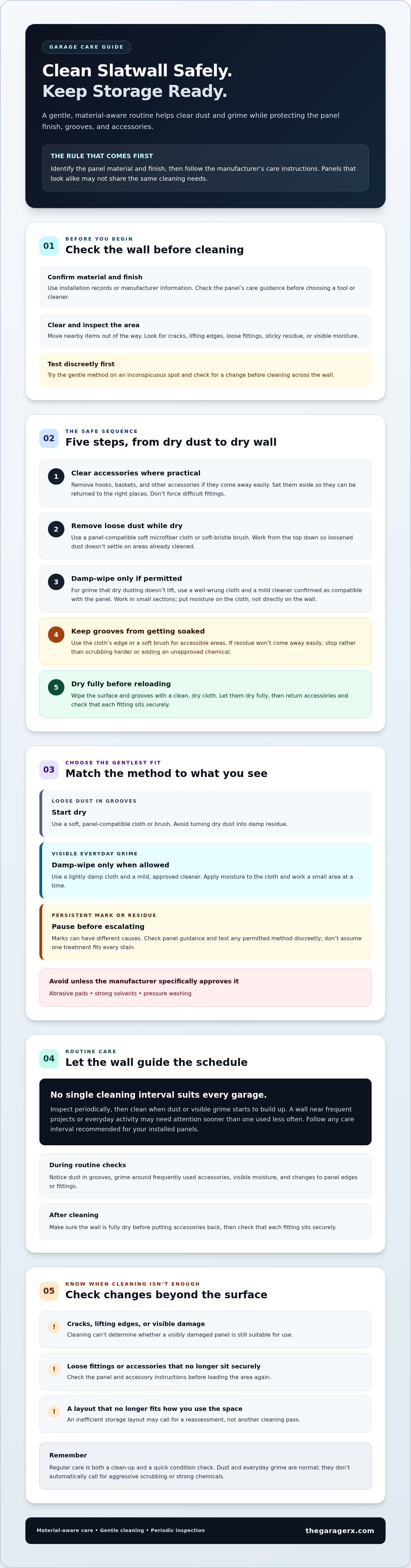
- Clear the work area. Remove hooks, baskets, and other accessories where practical. Group and set them aside so they’re easy to put back in the right places. Don’t force fittings that are difficult to remove.
- Remove loose dust while dry. Wipe the panel with a soft cloth or gently brush dust from the grooves using a panel-compatible tool. Work from the top down so loosened dust doesn’t settle on areas you’ve already cleaned.
- Wipe only if permitted. For visible grime that dry dusting doesn’t lift, use a lightly damp cloth and an approved mild cleaning solution. Work in small sections, applying moisture to the cloth rather than pouring or spraying liquid onto the wall.
- Keep grooves from getting soaked. Use the cloth’s edge or a soft brush to reach accessible areas. If residue doesn’t come away easily, stop rather than scrubbing harder or adding an unapproved chemical.
- Dry before reloading. Wipe the surface and grooves with a clean, dry cloth. Let them dry fully, then return the accessories and check that each fitting sits securely.
Take your time around accessory contact points, where dust and grime can collect. If the cleaning process reveals damage or the fittings no longer suit how you use the space, cleaning won’t resolve the underlying issue. Homeowners considering a new layout can explore garage slatwall system planning as a practical next step.
Choose the right method for dust, marks, and stubborn residue
Not every mark calls for the same response. Loose dust, a smudge from handling an accessory, and a persistent stain may look similar from a distance, but they don’t necessarily have the same cause or safe cleaning method. Use the gentlest approach that fits what you see, and let the panel’s care instructions guide any step beyond routine dusting.
How should you handle dust and everyday grime?
Start with dry dust removal. A soft cloth or other panel-compatible tool can lift loose particles without turning them into muddy residue during wiping. If grime remains, use a minimally damp cloth only if the manufacturer permits it for your panel material and finish. Work in a small, inconspicuous section first. Stop if the surface changes, the mark spreads, or the cloth picks up color.
For grooves or areas around hooks, use a gentle touch rather than pressing hard into the panel. Dirt that doesn’t lift easily is a reason to pause, not to scrub more aggressively. Follow the product instructions before trying a different method, especially if you’re unsure whether the panel can tolerate moisture.
What if a mark will not come off?
Don’t assume a stubborn mark needs a stronger cleaner. It could be residue on the surface, discoloration, or a sign of moisture or panel damage. Since materials and finishes vary, an unapproved solvent or abrasive cleaner could make the problem worse instead of removing it.
Use a measured approach:
- Stop and document it. Take a photo and note where the mark appears and whether it changes after gentle cleaning.
- Check the panel guidance. Look through installation documents or manufacturer care instructions before applying another product or technique.
- Look for warning signs. Swelling, cracks, looseness, or persistent discoloration may indicate an issue that cleaning can’t fix.
A mark that remains after an approved gentle method may need further investigation. Avoid repeated wetting or escalating to harsher chemicals without confirming compatibility. If the panel appears swollen, cracked, loose, or continues to discolor, seek qualified guidance before relying on it to support stored items. Careful cleaning and maintaining garage slatwall means knowing when to stop and assess, not forcing every surface mark to disappear.
Maintain garage slatwall in South Florida’s humid conditions
South Florida’s humid conditions make it sensible to check garage slatwall for visible moisture and allow air to circulate through the space where practical. Panels can differ in material and finish, so don’t assume they all respond to humidity or cleaning in the same way. Follow the care guidance for your installed system, and pay attention to areas where damp gear or outdoor equipment rests against the wall.
How can you spot moisture concerns early?
Look for persistent dampness, unusual odors, discoloration, or changes in panel shape. Check behind items that may be stored while wet, such as outdoor equipment, and move damp belongings away from the wall to dry. If moisture keeps returning, investigate its source rather than trying to mask the signs with a stronger cleaner.
Dry damp surfaces promptly using a method approved for the panel. If you notice swelling, warping, or another visible change, avoid loading that area until you’ve checked the manufacturer’s guidance or sought qualified advice. Cleaning may remove surface dirt, but it can’t correct an underlying moisture problem.
What belongs on a simple slatwall care checklist?
Use ordinary garage tidying as a chance to check the wall. A quick review helps you catch changes without turning maintenance into a major project. Keep the steps consistent, and follow product-specific care directions for any cleaning beyond dry dust removal.
- Remove loose dust using a panel-compatible tool.
- Check visible areas for dampness, discoloration, or changes in shape.
- Confirm hooks and other accessories remain secure.
- Dry damp equipment and surfaces before returning items to the wall.
- Note recurring moisture or damage so you can investigate it rather than simply cleaning over it.
If you’re reviewing how items are arranged, a guide to garage wall organization systems can help you think through access and storage zones. For a storage layout update or a new slatwall system, explore garage slatwall systems from The Garage RX. A thoughtful plan can help keep frequently used items accessible while making it easier to inspect the wall behind them.
When to repair, replace, or redesign your garage slatwall
Cleaning can remove dust and surface grime, but it can’t fix a cracked panel, secure a failing fitting, or confirm that a damaged area is safe to keep loading. Separate cosmetic dirt from changes in the wall’s condition. If something looks different after cleaning, pause and assess it rather than scrubbing harder or assuming the system is still sound.
Which signs call for a closer inspection?
Look closely for cracks, loose or lifting sections, persistent moisture, and accessories that repeatedly shift or won’t stay seated. A hook that slips may be incompatible, incorrectly positioned, or affected by a panel issue, so don’t assume tightening or cleaning will solve it. If the cause isn’t clear, check the manufacturer’s guidance or seek a qualified assessment.
Until the condition and loading suitability of a questionable area are understood, remove stored items from that spot and avoid adding weight. A professional can help assess whether the panel may be suitable to keep using, needs attention, or should be replaced. No cleaning method can guarantee that a damaged panel will be restored.
How can a better storage layout make upkeep easier?
A layout that reflects how you use the garage can make both access and routine checks simpler. Group frequently used items together, keep accessories arranged so you can see the panel behind them, and avoid covering areas where you need to monitor for visible changes. If you’re planning a mix of wall storage and cabinets, consider how the two systems can work together before shifting items around.
Cleaning and maintaining garage slatwall is easier when the layout leaves room to inspect the surface and reach the items you use most. If the system no longer fits your storage needs, The Garage RX offers garage slatwall systems, custom garage cabinets, and other garage storage options. Explore garage storage solutions with The Garage RX to consider a layout that better suits your space.
Keep your garage storage clean, sound, and ready to use
A simple, material-aware routine goes a long way. Start with dry dusting, use only cleaning methods approved for your panel, and avoid excess moisture or forceful scrubbing. Regular visual checks can also help you spot loose fittings, persistent dampness, or damage that cleaning won’t fix.
For South Florida garages, check areas behind damp equipment and pay attention to ventilation and recurring moisture. If panels appear damaged or your storage layout no longer works, pause before reloading the affected area and consider getting professional guidance. Cleaning and maintaining garage slatwall is easier when the system is suited to your space and kept accessible for routine care.
The Garage RX provides garage slatwall systems and professional storage installations in Davie and surrounding South Florida counties, including Broward, Miami-Dade, and Palm Beach. Explore garage storage solutions with The Garage RX if you’re planning an update. With careful upkeep and a thoughtful layout, you can keep your garage organized and ready for what’s next.
Frequently Asked Questions
How do you clean garage slatwall?
Clean garage slatwall by removing stored items where practical, dusting with a soft tool, and using a lightly damp cloth only if the panel instructions permit it. Work in small sections and keep water out of the grooves. Avoid abrasive pads and cleaners that haven’t been confirmed as compatible. Dry the panel fully before replacing accessories. Since materials and finishes vary, check the manufacturer’s guidance first and stop if the surface changes.
What is the best cleaner for garage slatwall?
There isn’t one cleaner that’s best for every garage slatwall panel. Check the product or manufacturer care instructions for your panel’s material and finish, then test an approved cleaner on a discreet area. For light grime, a soft cloth with minimal moisture may be enough if the instructions allow it. Don’t assume a household solvent or strong cleaner is safe just because it works on another surface.
Can you use a pressure washer on garage slatwall?
Don’t use a pressure washer on garage slatwall unless the manufacturer specifically confirms it’s safe for your panels. High-pressure water may enter grooves, edges, or nearby wall areas, while the force may not suit the panel material. Check product instructions before using water beyond a controlled wipe. For routine dust and light grime, choose a soft, low-moisture method that the panel’s care guidance permits.
How often should garage slatwall be cleaned?
Clean garage slatwall when visible dust or grime builds up, and inspect it periodically during ordinary garage upkeep. The right frequency depends on how you use the space, nearby projects, and how much dust or outdoor equipment the garage sees. Follow any cleaning interval listed by the panel manufacturer. Regular checks can also help you notice loose accessories, persistent moisture, or visible changes before they become harder to assess.
How do you remove stains from slatwall without damaging it?
Identify the panel material and finish, then check the manufacturer’s care advice before treating a stain. Test only an approved, gentle method on a discreet area, using a soft cloth and minimal moisture if permitted. Don’t scrub aggressively or apply solvents without confirming they’re compatible. If the mark remains or the surface changes, stop and seek guidance. The mark may need a material-specific assessment rather than a stronger cleaner.
Can humidity damage garage slatwall?
Humidity’s effect depends on the panel material, finish, installation, and surrounding conditions. In Davie and elsewhere in South Florida, check for persistent dampness, unusual odors, discoloration, or visible changes rather than assuming every panel responds the same way. Keep wet equipment from resting against the wall, and dry damp surfaces when appropriate. If moisture returns or the panels change shape, check the manufacturer’s guidance and investigate the source.
When should garage slatwall be repaired or replaced?
Arrange a closer inspection if panels are cracked, loose, persistently damp, visibly changing, or no longer holding accessories securely. Cleaning removes surface dirt, but it can’t confirm that a damaged panel is safe or restore its condition. Check installation or manufacturer guidance, and avoid loading an affected area until it’s assessed. A qualified professional can help evaluate the wall’s condition and whether the storage layout still suits your needs.