

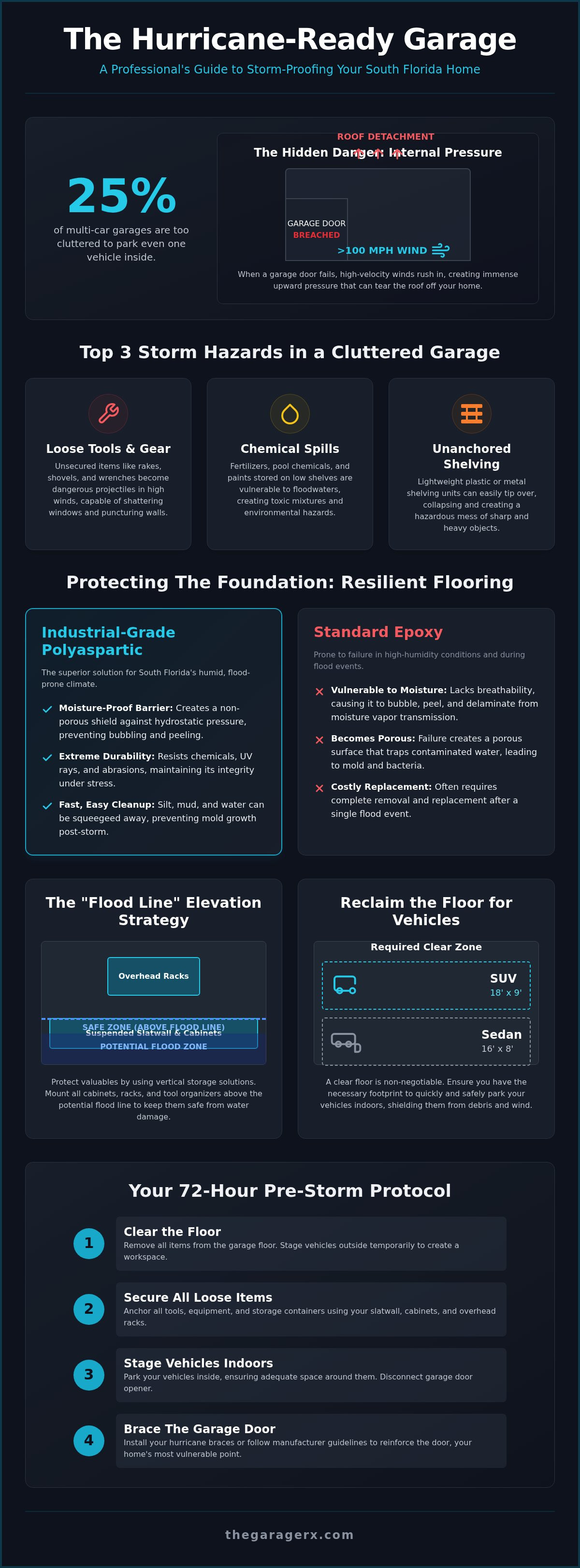
Roughly 25% of homeowners with multi-car garages cannot park a single vehicle inside because of accumulated clutter. In South Florida, this lack of space is more than a daily frustration; it is a significant safety liability. When the 2026 hurricane season arrives, a disorganized garage turns loose tools into potential projectiles and leaves your most valuable assets exposed to the elements.
We understand the stress of watching the weather channel while your garage floor is buried under boxes that are vulnerable to rising floodwaters. Getting your garage organized for hurricane season is a necessary intervention for your home's structural integrity. This guide offers a professional prescription to transform your space. We will show you how to achieve a clear floor for vehicle staging, elevate your gear with industrial-grade storage, and create a systematic environment that makes storm lockdown fast and stress-free.
By focusing on technical precision and moisture-hardened materials, you can move from environmental chaos to the calm of a finished, protected project. Let's start the diagnostic process to ensure your garage is ready for whatever the season brings.
Key Takeaways
- Identify the hidden risk of "Internal Pressure" and learn how a clear garage prevents catastrophic structural failure during high-wind events.
- Discover why industrial-grade polyaspartic coatings provide a more resilient moisture barrier than standard epoxy in South Florida’s humid climate.
- Protect your valuables from potential flood damage by getting your garage organized for hurricane season using the "Flood Line" elevation strategy.
- Master a disciplined 72-hour pre-storm protocol to transition your space from a functional workshop to a secure, vehicle-ready sanctuary.
- Replace temporary seasonal fixes with a professional diagnostic plan that ensures your garage remains a high-performance, storm-ready asset year-round.
The Diagnostic: Why a Cluttered Garage is a Hurricane Liability
A cluttered garage is a dormant hazard waiting for a catalyst. Before the June 1st start of the 2026 season, every South Florida homeowner needs a professional diagnostic of their storage environment. Getting your garage organized for hurricane season is a vital step in comprehensive hurricane preparedness. We define a hurricane-ready garage as a space specifically engineered for vehicle protection and debris containment. If a garage door fails, the resulting internal pressure creates an upward lift so powerful it can detach the roof from the walls. This structural failure is often preventable by eliminating the internal chaos that compromises the integrity of the space.
Your diagnostic should identify the top three storm hazards hiding in your clutter:
- Loose Tools: Hammers, shovels, and garden shears that aren't secured.
- Chemical Spills: Fertilizers and pool chemicals stored on low, vulnerable shelves.
- Unanchored Shelving: Lightweight plastic or metal units that can tip or collapse.
The Projectile Effect: Turning Clutter into Hazards
High-velocity winds don't just stay outside; they find gaps. When wind speeds exceed 100 mph, a simple rake or a heavy wrench becomes a missile that can shatter vehicle windows or puncture drywall. Keeping heavy items away from windows and glass-top workbenches is a non-negotiable safety standard. The Projectile Effect is the transformation of unsecured household objects into high-speed ballistic threats when exposed to extreme wind loads. By clearing these items now, you remove the "ammunition" that a storm uses to damage your home from the inside.
Reclaiming the Floor for Vehicle Protection
Your vehicles are among your most significant investments. Parking them inside is the most effective way to shield them from flying debris and crushing forces. To succeed, you must calculate your spatial requirements. A standard SUV typically needs an 18-foot by 9-foot clear zone. A sedan needs roughly 16 feet by 8 feet. Getting your garage organized for hurricane season ensures you have the footprint necessary to stage these vehicles quickly. The relief of having a prescribed plan replaces the frantic energy of last-minute preparations with the calm of a structured environment. When every square foot is accounted for, you can park with confidence, knowing your vehicles are sheltered in a secure sanctuary.
Protecting the Foundation: High-Performance Flooring and Vertical Walls
The garage door is often cited as the most vulnerable part of the home during a major storm. If that barrier is breached, your internal surfaces become the final line of defense for your property's structural integrity. Standard garage environments are rarely equipped to handle the high humidity and potential water intrusion of a South Florida hurricane. To transform your garage into a resilient sanctuary, you must address the two most critical surfaces: the floor and the walls. A professional-grade intervention ensures these areas don't just hold gear, but actively resist storm-related damage.
Polyaspartic vs. Epoxy: Which Survives the Storm?
In South Florida, the concrete slab beneath your feet acts like a sponge. During a tropical event, hydrostatic pressure forces moisture through the pores of the concrete. Standard epoxy coatings often fail because they lack the breathability and flexibility to withstand this moisture vapor transmission. They bubble, peel, and delaminate, especially when power outages cause indoor humidity to spike. An industrial-grade polyaspartic floor coating is the superior diagnostic solution for flood-prone zones. It creates a non-porous, UV-resistant shield that remains bonded to the concrete even under extreme stress.
Post-storm cleanup is significantly easier with a high-performance surface. Silt, mud, and stagnant water can be squeegeed away in minutes. This prevents the mold and bacteria growth often found in porous concrete or failing epoxy. Getting your garage organized for hurricane season starts with a floor that can survive a soaking without requiring a total replacement.
Slatwall Systems: The Vertical Anchoring Solution
Vertical real estate is your best defense against rising water and wind-borne vibrations. Moving bikes, heavy rakes, and lawn equipment onto garage wall organization systems clears the floor for vehicle staging. Slatwalls provide more than just storage; they offer structural anchoring. During a hurricane, high-wind vibrations can shake standard shelving until items fall. Industrial-grade slatwalls utilize locking hooks to secure tools in place. This prevents loose items from becoming the projectiles we identified in our initial diagnostic.
Customizing your slatwall layout allows you to prioritize storm gear, such as shutters and emergency kits, at chest height for rapid access. Getting your garage organized for hurricane season means every item has a fixed, vertical home. If you're ready to upgrade your home's defenses, consider a professional garage consultation to map out your vertical anchoring strategy.
The Elevation Strategy: Suspended Cabinets and Overhead Racks
In South Florida, the concrete floor is a potential flood zone even during moderate tropical events. Getting your garage organized for hurricane season requires a disciplined elevation strategy to protect your property. We utilize the "Flood Line" concept as a primary diagnostic standard. This approach mandates that all moisture-sensitive valuables, electronics, and paper documents remain at least 12 inches off the concrete surface. By reclaiming the vertical space above this line, you create a necessary buffer against water intrusion and the pervasive humidity that often follows a storm surge or heavy rainfall.
Custom Cabinets: Elevated Protection
Standard floor-standing cabinetry is a liability in a storm-prone environment. These units trap moisture against the slab, leading to rot, and provide hidden nesting grounds for pests during the humid summer months. Custom garage cabinets mounted directly to wall studs offer a superior intervention. These suspended systems keep your gear entirely off the floor, facilitating rapid cleanup if water enters the space. We utilize industrial-grade hardware and soft-close hinges to ensure doors stay securely shut during high-wind vibrations. This structural precision ensures your tools and supplies remain protected within a high-end, orderly environment.
Maximizing the Ceiling with Overhead Racks
The ceiling is the ultimate safe zone for items you only need during an emergency. Overhead garage storage racks in Miami are the ideal prescription for plywood shutters, heavy coolers, and seasonal bins. While DIY racks often suffer from limited weight capacities and questionable anchoring, professional-grade systems are engineered for the heavy loads associated with storm gear.
Motorized overhead storage represents the highest tier of this elevation strategy. These systems allow homeowners to raise and lower heavy bins with a simple remote or wall switch. This eliminates the dangerous necessity of climbing ladders while moving heavy objects during a frantic storm countdown. We prioritize strategic placement during the installation process to ensure these racks never interfere with the garage door track or motor. Getting your garage organized for hurricane season means utilizing every cubic inch of your space without compromising the operation of your home's most critical entry point.
The 72-Hour Pre-Storm Protocol: A Step-by-Step Checklist
A high-performance garage system is only as effective as the homeowner's operational discipline. While industrial-grade materials provide the foundation, a structured protocol ensures that your garage performs as intended when the pressure rises. Getting your garage organized for hurricane season requires a phased approach that moves from broad organization to technical lockdown. This methodical timeline eliminates the frantic, error-prone rush that often precedes a South Florida tropical event. By following a prescribed sequence, you transition your space from a functional workshop into a secure, debris-contained sanctuary.
- Phase 1 (72 hours out): The "Clear the Deck" floor sweep. Every item currently on the floor must be transitioned to your overhead racks or custom cabinets to prevent water damage from minor flooding.
- Phase 2 (48 hours out): Vertical anchoring and cabinet locking. Verify that all slatwall accessories are locked into place. Engage heavy-duty hardware on all cabinet doors to prevent them from vibrating open.
- Phase 3 (24 hours out): Vehicle staging and perimeter sealing. Move cars into their prescribed zones. Ensure all weather stripping at the base of the door is intact and clear of debris.
- Phase 4 (Final 12 hours): Power management and emergency access. Disconnect the electric opener to protect against surges and ensure you can operate the door manually if the power fails.
Securing the Interior Perimeter
A professional organization plan accounts for the "last mile" items that often become afterthoughts during a storm warning. Propane tanks should never be stored inside the garage; even a minor leak can lead to a catastrophic explosion if the space is sealed. Move these to a secure, ventilated outdoor location. Garbage cans, patio furniture, and outdoor toys must be brought inside and anchored to your slatwall system. Double-check your heaviest slatwall attachments. High-wind vibrations can loosen poorly seated hooks, turning a heavy ladder into a projectile. If you haven't yet secured your vertical space, now is the time to schedule a professional garage transformation to ensure your anchoring points are industrial-grade.
The Garage Door Lockdown
The garage door remains the most critical barrier for your home's structural integrity. Inspect the tracks for debris or silt that could prevent a complete seal. Even a small gap allows wind to enter, increasing the internal pressure risk we identified in our initial diagnostic. For older doors that lack a modern impact rating, consider using a reinforcement kit to stiffen the center panels. Finally, pull the emergency release cord and disengage the electric opener. This prevents the motor from burning out during a power surge and ensures you can manually open the door if the electronics fail after the storm passes.
Professional Intervention: Implementing a Permanent Readiness Plan
Seasonal cleaning is a temporary bandage on a structural organization problem. It doesn't solve the core issue of environmental chaos that compromises your home's safety. Getting your garage organized for hurricane season requires a fundamental shift from reactive tidying to proactive engineering. We view this as a necessary intervention for your household’s long-term health. While a weekend decluttering might clear some floor space, it lacks the technical precision required to withstand the pressures of a major storm. A permanent readiness plan ensures your garage is always in a state of high-performance defense.
A professional garage organization system is an investment in both protection and property equity. Industry data indicates that organized garage systems can recoup 75% to 85% of their cost in home resale value. This makes professional organization one of the most logical home improvements for South Florida homeowners. You're not just purchasing cabinets or racks; you're hardening your home's most vulnerable entry point. When you compare the cost of a specialized installation to the catastrophic expense of storm damage or vehicle loss, the value of a professional diagnostic becomes clear.
Custom Solutions for Davie and Broward County
Our team brings specialized expertise to Davie and the broader Broward County area. We understand the nuances of South Florida residential architecture and the specific demands of local hurricane codes. We don't just sell products; we provide a formal consultation to identify your space's unique vulnerabilities. Our "White Glove" installation process is designed for efficiency and technical accuracy. We move your garage from a state of frustration to a high-end, orderly environment in just a few days. Scheduling your check-up before the peak of the 2026 season ensures you aren't caught in the last-minute rush when a storm is named.
Next Steps: Reclaim Your Space
Reclaim your space and your peace of mind. A high-performance garage serves you long after the 2026 season ends. It transforms a dysfunctional storage unit into a disciplined, aesthetically minded sanctuary for your vehicles and hobbies. Getting your garage organized for hurricane season is the first step toward a serene, orderly home that is prepared for any environmental challenge. Our methodical process moves you through the frantic energy of clutter to the calm of a finished, professional project. Take the first step toward a secure home. Schedule your professional garage diagnostic today.
Secure Your South Florida Sanctuary Today
Transitioning your garage from a chaotic storage unit to a storm-hardened asset is a necessary intervention for your home's safety. We have explored how industrial-grade polyaspartic floors and vertical slatwall systems create a resilient foundation. Getting your garage organized for hurricane season is a disciplined process that ensures your vehicles remain sheltered. It's about moving from a state of environmental chaos to the satisfaction of an organized, high-end environment.
Our local Davie experts utilize industrial-grade materials designed specifically for South Florida humidity. We specialize in custom-designed systems for cabinets, flooring, and slatwalls that survive the unique challenges of our climate. Don't wait for the next storm warning to address your space's vulnerabilities. A professional prescription for your garage ensures that every tool is anchored and every square foot is optimized for protection.
Get Your Professional Garage Diagnostic from The Garage RX and reclaim your space. You deserve the confidence of a serene, orderly sanctuary that stands ready for the 2026 season and beyond.
Frequently Asked Questions
Is it better to park my car in the garage or the driveway during a hurricane?
Parking inside the garage is the superior choice for protecting your vehicle from wind-borne debris and structural damage. Driveways leave cars exposed to flying objects and falling branches that can shatter glass or crush roofs. A clear floor is essential for this staging. By getting your garage organized for hurricane season early, you ensure there is sufficient footprint to fit all household vehicles before the first storm warning is issued.
How much weight can professional overhead garage racks actually hold?
Professional overhead storage racks are engineered to support significant loads, often ranging from 600 to 800 pounds when anchored to structural ceiling joists. This capacity is far superior to standard DIY shelving units. These systems provide a secure safe zone for heavy bins and plywood shutters. We prioritize technical precision during the installation process to ensure the weight is distributed safely without compromising your home's ceiling integrity or garage door operation.
Will a polyaspartic floor coating help if my garage floods?
Polyaspartic floor coatings act as an industrial-grade moisture barrier that remains bonded to the concrete even during water intrusion. Unlike standard epoxy, which can bubble and peel when hydrostatic pressure increases, polyaspartic is non-porous and resilient. This makes post-storm cleanup much faster. You can squeegee away silt and stagnant water without worrying about mold growth or material delamination. It is a vital intervention for flood-prone zones in Davie.
Can I install hurricane braces on any garage door?
Most residential garage doors can be retrofitted with reinforcement kits or braces, but the door's existing track and hinges must be in good health. These braces add necessary stiffness to the center panels to resist high-wind pressure. However, older doors may still require a full impact-rated replacement to meet the 2026 Florida Building Code. We recommend a professional diagnostic to assess if your current door can handle the added weight of structural bracing.
What is the best way to store gas cans and generators in a garage?
Never store propane tanks or full gas cans inside your garage; even a minor leak creates a significant fire and explosion risk in a sealed space. Store these fuels in a ventilated, secure outdoor location. Generators should only be moved into the garage when they are cool and completely empty of fuel. Designating a dry, elevated spot for your generator keeps it safe from rising floodwaters and ready for immediate post-storm use.
How do I prevent mold in my garage after a South Florida storm?
Preventing mold requires eliminating the porous surfaces where moisture thrives. Installing a polyaspartic floor coating and custom-built, off-the-floor cabinets removes the organic material that fuels mold growth. After a storm, use high-velocity fans to circulate air and lower the humidity levels quickly. Our specialized storage systems facilitate this airflow by keeping your gear elevated. This technical approach ensures your garage remains a clean, high-end environment even after heavy South Florida rains.
Are custom garage cabinets waterproof?
Our custom garage cabinets are designed to be highly water-resistant and are mounted off the floor to prevent direct contact with standing water. While no wood-based product is entirely waterproof if submerged for long periods, the elevated design provides a critical buffer against minor flooding. We use heavy-duty hardware and industrial-grade materials that withstand the intense South Florida humidity. This strategy keeps your valuables dry and protected within a secure, suspended environment.
When is the best time to start organizing my garage for hurricane season?
The ideal time to implement a permanent readiness plan is during the spring, well before the June 1st deadline. Starting early allows for a thorough diagnostic consultation and a professional installation without the pressure of an approaching storm. Getting your garage organized for hurricane season is the first step toward a serene, orderly sanctuary. Most homeowners find that a professional "White Glove" transformation takes just a few days to complete from start to finish.