

What if the biggest factor in a successful patio coating isn’t the color or the product label, but the concrete beneath it? If you’re researching polyaspartic garage floor coating Davie options for an outdoor space, don’t assume a system intended for a garage will automatically suit an exposed patio.
Davie’s heat, rain, humidity, and outdoor conditions make the slab’s condition and drainage important parts of the decision. It’s reasonable to want a durable, attractive finish, but moisture, surface damage, or incomplete preparation can compromise the result. A careful assessment should come before a product recommendation.
This guide explains what to check on your patio concrete, how to compare polyaspartic and epoxy options, and which installation details to discuss with prospective professionals. You’ll also learn what to ask about surface preparation, moisture evaluation, system components, and project scope, so you can separate meaningful answers from broad product claims. The right next step is a practical assessment of your specific patio, its exposure, and whether the proposed coating system is appropriate for it.
Key Takeaways
- Assess the patio’s concrete, sun exposure, rain, and drainage before deciding whether a coating system is appropriate.
- Separate general claims about polyaspartic from details supported by the proposed system’s technical documentation.
- Compare proposals by substrate assessment, preparation, repairs, written scope, and aftercare, not just by coating name.
- Searching for polyaspartic garage floor coating Davie? Confirm whether the provider handles exterior patios and can assess your specific surface.
- Photograph defects, note past treatments and areas where water pools, then use those details to guide your project review.
Is Polyaspartic Coating Right for a Davie Garage Patio? Start with the Surface
A patio needs a different assessment from an enclosed garage floor. It’s exposed to direct sun, rain, shade, and water that may collect instead of draining away. Those conditions can affect which coating system is appropriate, but Davie’s climate alone doesn’t prove that every polyaspartic product is suitable for every patio.
Polyaspartic coating is a coating system applied over prepared concrete. The material is only one part of the decision. For homeowners searching for polyaspartic garage floor coating Davie, a garage-focused product description shouldn’t substitute for confirmation that the proposed system is intended for the patio’s substrate and exposure. For a basic overview of the material’s chemistry, see Polyaspartic ester chemistry.
Material choice vs. installation: Polyaspartic identifies a type of coating material. Preparation and installation describe how the concrete is assessed and readied, and how the specified system is applied. A suitable material cannot make up for a surface or installation plan that doesn’t fit the site.
What should a Davie homeowner inspect on a concrete patio?
Start with a visual review, not a diagnosis. Look for visible cracks, flaking or spalled concrete, old coatings, stains, and places where water collects after rain. Note where those issues appear and photograph them to discuss during a site assessment.
This check helps you describe the patio, but it can’t determine what’s beneath the surface or establish its moisture condition. Don’t assume the concrete is dry or ready for coating based on appearance alone. Ask the installer to assess the actual slab and explain what further evaluation, if any, is needed before recommending a system.
How does outdoor exposure change the decision?
Map the patio’s conditions: which areas receive direct sun, which stay shaded, where rain reaches the concrete, and where drainage leaves water standing. A covered section and a fully exposed section may face different conditions, so share the details rather than treating the patio as one uniform surface.
Then verify the recommendation. Ask the provider to confirm that the exact product system is suitable for exterior use on your concrete and exposure, using manufacturer documentation and installer guidance. Check supporting documentation before relying on claims about sun or weather performance, or slip resistance. The decision should follow a site-specific assessment, not a broad promise about polyaspartic coatings.
How Polyaspartic Patio Coatings Work, and What Davie Buyers Must Verify
A coating system depends on more than the material named in a proposal. The concrete must be evaluated and prepared, any specified repairs completed, and each layer applied according to the system’s requirements. That’s why a product label alone can’t tell you whether a plan suits an outdoor patio.
For a polyaspartic garage floor coating Davie search, look beyond garage-focused claims. Exterior suitability must be confirmed for the specific system and site. Sun exposure, rain, drainage, existing treatments, and the slab’s condition all inform that decision. The Concrete surface preparation resource from AMPP also underscores why preparation and coating selection belong in the same conversation.
What does a professional patio coating assessment cover?
Ask the installer to assess the concrete’s condition, identify previous treatments, and consider how water drains and where sun or shade falls. The proposed preparation should address what’s actually observed: for example, a visible crack or area of flaking needs an explanation of how it will be handled, not a generic promise that the surface will be prepared.
Some questions need more than visual inspection. Ask what testing or technical confirmation is needed to evaluate suspected moisture concerns, compatibility with an existing coating, or other conditions that aren’t clear from the surface. The assessment should distinguish what the installer observed from what still needs verification.
Which product details should you request before approving the work?
Request the proposed system’s written specifications and explicit confirmation that it’s suitable for exterior application on your patio. Then match those details to the written scope. It should identify the planned preparation, any repair materials, and the coating layers included, so you can see how the work responds to the assessment.
Be precise about performance claims. If a proposal mentions cure time, UV response, traction, or maintenance, ask where that detail appears in the manufacturer’s documentation and how it applies to the exact system being proposed. Don’t assume that a claim for one product or application transfers to another.
A clear written plan turns a product recommendation into something you can evaluate: site conditions, preparation, materials, application steps, and supporting documentation. If you’re considering The Garage RX, you can ask about patio project assessment and confirm directly whether its current service scope includes your exterior surface.
Compare Davie Patio Coating Proposals by Scope, Not Just by the Product Name
Two proposals can name the same coating material and still describe very different projects. The word “polyaspartic” alone doesn’t establish patio suitability, preparation quality, or what work is included. Compare the assessment, written scope, and supporting documentation before weighing the product label.
Use this checklist to identify what each provider has actually committed to doing. Look for details in writing, not only verbal assurances or broad performance claims.
| Proposal detail | What to compare |
|---|---|
| Substrate assessment | Does the proposal describe the concrete’s observed condition, previous treatments, drainage, and exposure? |
| Preparation | Does it state how the surface will be prepared, and how that plan responds to the patio’s condition? |
| Repairs | Are visible cracks, spalling, or other noted defects addressed? Clarify what repair work is included and what is excluded. |
| System documentation | Does it identify the proposed coating system and provide documentation supporting its use on the specific exterior substrate? |
| Written scope | Are the application steps, materials, site assumptions, and exclusions clear enough to compare against another proposal? |
| Aftercare | Does the provider give written maintenance guidance and explain any applicable warranty terms, including limitations? |
Which questions reveal whether a proposal is complete?
Ask what preparation and concrete repairs are included, and what would trigger additional work. Request confirmation that the selected system is intended for your patio’s substrate and exposure. Have the provider put exclusions, relevant site conditions, maintenance guidance, and any applicable warranty terms in writing. If a claim appears only in conversation, ask where it will be documented.
How should you compare epoxy and polyaspartic proposals?
Compare the specified system and preparation plan, not assumptions attached to a material name. Check whether each proposal explains its layers, repair approach, and exterior suitability for your patio. For a separate discussion focused on garage-floor materials, see the 2026 epoxy coating guide. For broader durability context, review polyaspartic floor coating reviews.
A low-detail quote is hard to evaluate, even if it names the same coating as a more thorough proposal. If you’re comparing options for a polyaspartic garage floor coating Davie project, use the written scope to separate documented terms from unverified promises. Clear answers make it easier to spot gaps and decide what needs clarification before approving the work.
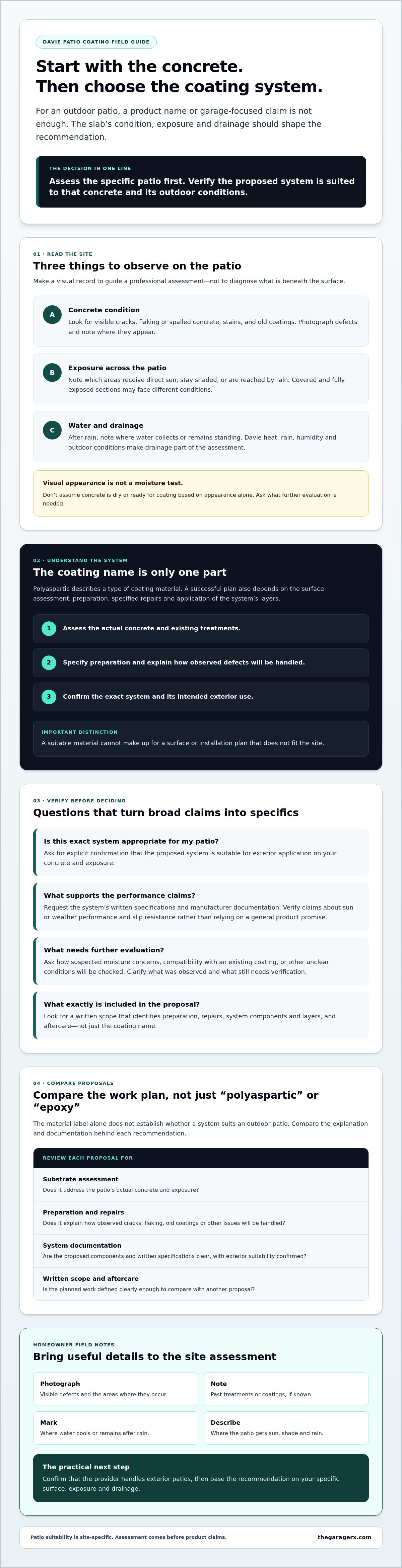
Prepare for a Polyaspartic Patio Project in Davie: A Homeowner Checklist
A well-prepared project starts with clear information, not a do-it-yourself repair plan. Your notes can help an installer understand the patio, but they don’t replace a site inspection or determine which preparation the concrete needs. Use this checklist to organize what you know and identify what still needs professional assessment.
What should you document before the site visit?
Separate what you’ve observed from what needs inspection. You can report where water pools after rain, but an installer must assess why it collects and whether the concrete has other conditions that affect the work. Photos and a record of the patio’s history help make that evaluation more specific.
- 1. Record the layout. Note approximate dimensions, access constraints, and which areas are exposed to direct sun or mostly shaded.
- 2. Photograph visible conditions. Capture cracks, flaking or damaged areas, stains, and any existing coating. Include wide views and closer shots so the locations are clear.
- 3. Track water patterns. After rain, note where water stands and whether the same areas collect it repeatedly. These are observations, not a diagnosis of the drainage or slab.
- 4. Share the surface history. Identify any known sealers, coatings, repairs, or recurring water issues. If you don’t know what product was used, say so rather than guessing.
What should the written project plan explain?
Once the site has been assessed, ask for a written plan that ties the proposed work to the patio’s actual condition. A generic preparation description doesn’t show whether observed defects or known past treatments have been considered.
- 5. Confirm the scope. Check that the proposal describes surface preparation, the repair work included, the coating system’s layers, site prerequisites, and exclusions.
- 6. Ask about timing. Have the installer explain how weather and site conditions may affect scheduling and application. Confirm project-specific limits directly instead of relying on general advice.
- 7. Get care instructions. Request written maintenance guidance and any system-specific waiting periods before the surface can be used. Follow the instructions for the proposed system.
- 8. Resolve open questions. Ask which observations require testing or technical confirmation before work begins, and get the answers recorded in the project documents.
Don’t attempt concrete repairs or coating application based on generic online directions. The appropriate steps and timing depend on the inspected surface and the selected system’s requirements. If you’re researching polyaspartic garage floor coating Davie for an outdoor patio, first confirm that the provider handles this type of exterior project and can assess your specific site. You can discuss your patio project scope with The Garage RX and confirm whether patio work falls within its current service scope.
Choose a Davie Coating Installer and Confirm Your Patio’s Next Step
The right installer should assess the actual patio, explain why a proposed system fits its conditions, and put the work scope in writing. A garage-floor coating background may be relevant, but it doesn’t establish exterior patio experience or confirm that a particular system is appropriate for your surface.
The Garage RX is a Davie-based flooring specialist offering polyaspartic and epoxy floor coatings. Before treating the company as a fit for a patio project, confirm directly whether it currently installs polyaspartic coatings on exterior patios in Davie. Suitability and service scope need to be established for your specific project, not inferred from a search for polyaspartic garage floor coating Davie.
What should you confirm with The Garage RX before requesting a project assessment?
Start with exterior experience and service availability. Ask whether patio installations are within the company’s current scope, then share what you know about the concrete, including its approximate dimensions, sun and rain exposure, past treatments, visible condition, and drainage concerns. Ask whether an assessment can determine which preparation plan and coating system, if any, fit those documented site conditions.
How can you make the next step straightforward?
Have your photos and notes ready, along with questions about the written scope, product documentation, scheduling, and any warranty terms the provider states. Ask which answers will be confirmed after the site is assessed. A discussion should help you clarify suitability; the product name or keyword alone isn’t a recommendation.
Compare the provider’s answers against the same criteria you’d use for any proposal: patio-specific experience, clear assessment, documented system details, and defined project terms. If an answer depends on a site condition that hasn’t been evaluated, ask what inspection or technical confirmation is needed before deciding.
For a project-specific discussion, contact The Garage RX and ask whether exterior patio coating is currently part of its service scope in Davie. Bring the details you’ve gathered and use the conversation to establish a clear next step, without assuming the patio is suitable before it’s assessed.
Make Your Patio Coating Decision With a Clear Plan
A successful patio project starts with the surface, not the product name. Document visible damage, prior treatments, sun and rain exposure, and areas where water collects. Then compare proposals by the assessment, preparation, repairs, documented system, and written project terms.
If you’re researching polyaspartic garage floor coating Davie, remember that a coating used on garage floors isn’t automatically suitable for an exposed patio. Ask the installer to assess your actual concrete and confirm exterior suitability for the specific system. Verify experience, scope, scheduling details, and any stated warranty terms directly.
The Garage RX is based in Davie, serves Broward, Miami-Dade, and Palm Beach counties, and offers professional polyaspartic and epoxy floor coating installations. Confirm whether its current service scope includes exterior patios and what system, if any, fits your site. Contact The Garage RX to discuss your Davie patio project and take the next step with clear questions and realistic expectations.
A careful assessment can turn uncertainty into a practical plan. Your patio deserves a recommendation grounded in its actual conditions.
Frequently Asked Questions
Is polyaspartic coating suitable for an outdoor patio in Davie?
It may be suitable, but only if the specific coating system is approved for exterior use and fits the patio’s concrete and exposure. Davie homeowners should have the installer assess sun, rain, drainage, existing surface conditions, and any prior treatments. Ask for product documentation supporting the recommendation. A coating used on a garage floor shouldn’t be assumed suitable for a patio just because the material name is the same.
Can polyaspartic coating be applied over an existing patio coating?
Possibly, but compatibility depends on the existing coating’s condition and the proposed system. Tell the installer what you know about previous products or repairs, and show photos if available. Don’t assume a new coating can be applied directly over an old one. The provider should inspect the surface and explain whether testing, removal, or another preparation step is needed before recommending an approach for your Davie patio.
How long does a polyaspartic patio coating take to install and cure?
There isn’t one reliable timeline for every patio. Installation and return-to-use periods depend on the specific system, preparation and repair needs, site conditions, and application requirements. Ask the installer for the manufacturer’s written cure guidance and a project-specific schedule, including any limits related to weather or exposure during application. Don’t rely on a general garage-floor claim as a promise about an outdoor patio in Davie.
Does polyaspartic coating make a patio slip-resistant?
Not automatically. Traction depends on the specified system and surface finish, and a product name alone doesn’t establish how a coated patio will perform when wet. Ask whether the proposed system includes a documented slip-resistance option and request supporting information for the exact application. Consider where rainwater collects and how the patio is used, then discuss those conditions with the installer before choosing a finish.
What should I look for in a Davie patio coating estimate?
Look for a written scope that describes the concrete assessment, surface preparation, included repairs, coating layers, site assumptions, and exclusions. It should also identify the proposed system and provide documentation supporting its use on your patio’s substrate and exposure. Request written maintenance guidance and any applicable warranty terms. Compare what each provider will do, not just the material name or verbal performance assurances.
Can The Garage RX install polyaspartic coating on my patio in Davie?
The Garage RX offers professional polyaspartic and epoxy floor coating installations and is based in Davie, but its patio installation availability isn’t confirmed here. Contact the company directly to ask whether exterior patios are within its current service scope. If they are, share your patio’s condition and exposure, and ask which system and preparation plan may suit the site. A project-specific assessment should guide the recommendation.
How do I prepare my concrete patio for a coating assessment?
Gather photos of visible cracks, flaking, stains, previous coatings, and areas where water pools after rain. Note approximate dimensions, access constraints, sun and shade patterns, and any known history of sealers or repairs. These are useful homeowner observations, not a diagnosis of the concrete or its moisture condition. Leave preparation and repair decisions to the installer, who can inspect the surface and determine what evaluation is needed.