

Why does a standard big box floor kit fail during a South Florida summer while an industrial system remains pristine? Most homeowners assume all coatings are created equal, but the reality is that retail products aren't formulated for our unique environmental stressors. You've likely seen the disappointing results of a DIY weekend: peeling under hot tires and yellowed surfaces that can't handle the intense UV exposure. It's frustrating to invest your weekend into a project only to watch high humidity trigger unsightly bubbles and delamination within months.
We agree that your home deserves a surface that's as resilient as it is beautiful. This guide reveals the technical standards that define a professional grade garage floor coating and explains why your space requires a specific material prescription to survive the local climate. You'll learn the chemistry behind industrial polyaspartic systems, how to achieve a showroom-quality finish that lasts over 20 years, and why superior chemical adhesion is the only permanent cure for Florida’s environmental chaos. We'll examine the transition from a dysfunctional, stained floor to a high-end, easy-to-clean environment that adds real value to your property.
Key Takeaways
- Identify the technical threshold of 100% solids chemistry that separates a professional grade garage floor coating from temporary retail paints.
- Recognize how specific polyaspartic prescriptions protect your floor against South Florida’s unique challenges, including hydrostatic pressure and extreme UV exposure.
- Understand the professional diagnostic process, from concrete hardness checks to diamond grinding, that ensures a lifetime of adhesion.
- Quantify the long-term value of a showroom-quality finish that increases property resale value while resisting chemical spills and heavy traffic.
- Streamline your renovation with industrial cure times that allow for a full return-to-service in as little as 24 hours.
What Defines a Professional Grade Garage Floor Coating?
Professional grade isn't a marketing buzzword; it's a measurable standard of chemical engineering. A true professional grade garage floor coating functions more like a structural component than a cosmetic finish. It requires a diagnostic approach that begins with assessing the substrate's health rather than just covering it up. This technical threshold separates industrial systems from the "one-size-fits-all" products found at local hardware stores. You aren't just buying a bucket of paint; you're investing in a sophisticated chemical system designed for high-stress environments.
High Solids Content vs. Water-Based Retail Kits
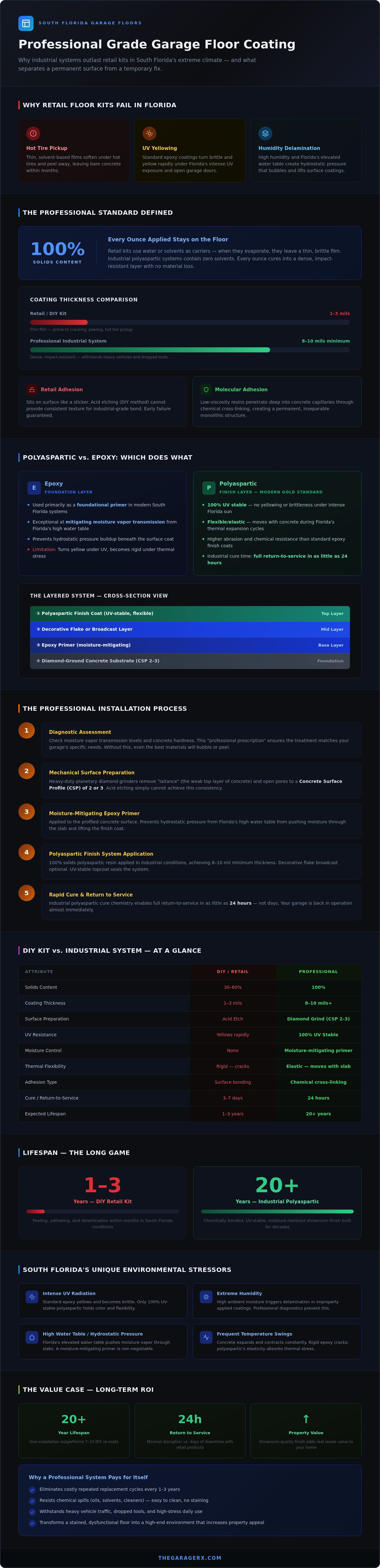
Retail kits often rely on water or solvents as carriers. When these liquids evaporate, they leave behind a thin, brittle film that is prone to "hot tire pickup." Industrial-grade polyaspartic systems are 100% solids. This means every ounce of product applied stays on the floor, curing into a dense, impact-resistant layer. A professional installation targets a minimum thickness of 8 to 10 mils. This provides the necessary body to withstand heavy vehicles and dropped tools without cracking or delaminating.
Chemical Cross-Linking and Molecular Adhesion
Durability isn't just about thickness; it's about how the material interacts with the concrete. While retail products sit on the surface like a sticker, professional resins utilize chemical cross-linking to fuse with the concrete pores. This process transforms the floor into a monolithic structure. Molecular adhesion is the chemical bond formed when low-viscosity resins penetrate deep into the concrete capillaries to create a permanent, inseparable union.
Achieving this bond is impossible without mechanical preparation. Professional installers use heavy-duty planetary diamond grinders to remove the "laitance," which is the weak top layer of concrete. This process opens the pores to a Concrete Surface Profile (CSP) of 2 or 3. Acid etching, the common DIY alternative, simply cannot provide the consistent texture required for industrial-grade adhesion. If the concrete isn't properly profiled, the coating has nothing to grab onto, leading to early failure.
Before any resin touches the floor, a diagnostic phase is essential. We check for moisture vapor transmission and concrete hardness. This "professional prescription" ensures the treatment matches the specific needs of your garage. Without this expert assessment, even the best materials will eventually bubble or peel due to South Florida’s high water table and humidity.
Polyaspartic vs. Epoxy: The Professional Prescription for Durability
Selecting the right material for your floor is a diagnostic process rather than a simple color choice. While both epoxy and polyaspartic resins have their place in industrial applications, a professional grade garage floor coating system often utilizes both to address specific environmental stressors. We don't just apply a product; we prescribe a layered solution based on the slab's unique condition and your daily usage patterns. This methodical approach ensures the coating behaves as a permanent part of your home's structure.
When Epoxy is the Right Diagnosis
Standard epoxy has been the industry workhorse for decades, but its role has evolved. In South Florida, we primarily utilize it as a foundational layer or a specialized primer. High-performance epoxy primers are exceptional at mitigating moisture vapor transmission. If your concrete slab is "sweating" due to our high water table, a moisture-mitigating primer is an essential intervention. It prevents the hydrostatic pressure that causes inferior coatings to bubble and peel. You can explore the technical details of these foundational layers in our guide to high-performance epoxy coating for garage floor systems.
The Polyaspartic Advantage for Modern Garages
For the visible, high-traffic finished surface, polyaspartic technology is the modern gold standard. It offers significantly more flexibility than traditional epoxy. This elasticity is vital because concrete slabs expand and contract with Florida’s frequent temperature swings. A rigid floor will crack under these thermal stresses, while a flexible polyaspartic layer moves with the substrate. These resins are also 100% UV stable, meaning they won't turn yellow or become brittle when exposed to the intense sun through an open garage door.
One of the most significant professional benchmarks is the return-to-service time. Retail products often require several days of drying before you can walk on them. A professional polyaspartic system cures rapidly, allowing for a 24-hour return-to-service. This speed doesn't compromise strength; it actually eliminates "hot tire pickup," a common failure where heated tires bond to and pull up weaker coatings. When reviewing polyaspartic floor coating reviews, the consensus is clear: the chemical resistance and thermal stability of these systems are unmatched for long-term performance. If you're ready to resolve the chaos of a peeling floor, seeking expert guidance on material selection is the first step toward a permanent cure.
Why Professional Grade is Essential for South Florida’s Climate
South Florida’s climate acts as a relentless laboratory for material failure. High humidity and intense solar radiation create a hostile environment that standard coatings cannot survive. A professional grade garage floor coating must do more than just look good. It must function as a structural barrier against external environmental stressors. In areas like Davie and coastal Broward County, the combination of a high water table and salt air necessitates a specialized approach to floor protection. We view these local conditions as a set of symptoms that require a specific material intervention to ensure long-term stability.
Managing Moisture Vapor Transmission (MVT)
Concrete is naturally porous and functions like a sponge for ground moisture. In our region, hydrostatic pressure pushes water vapor up through the slab. This is the primary cause of delamination in retail-grade finishes. Professional installers perform rigorous moisture testing as part of the initial diagnostic phase. This step determines the specific "prescription" your floor needs. We often utilize moisture-mitigating primers to create an impermeable seal. This barrier prevents vapor from breaking the molecular bond between the coating and the concrete. Without this moisture management, even a high-end topcoat will eventually bubble and peel.
The Importance of UV-Stable Topcoats
The Broward County sun is a primary cause of coating degradation. Many standard resins are "aromatic," meaning they contain chemical structures that break down and turn yellow when exposed to ultraviolet light. Professional systems utilize "aliphatic" polyaspartic resins instead. These materials are chemically engineered to remain clear and stable despite direct sunlight. This ensures your garage maintains its showroom aesthetic even when the door stays open for extended periods. Our selection process focuses on these high-performance materials to guarantee long-term color retention and structural integrity against South Florida's UV index.
Coastal properties face the added challenge of salt air corrosion. Salt particles can penetrate untreated concrete and reach the internal rebar. This leads to oxidation and structural weakening over time. An industrial coating creates an airtight seal that locks out these corrosive elements. This protection is vital for maintaining the longevity of your home's foundation. By addressing the unique humidity levels in Davie through precise material selection, we provide a floor that remains resilient against the most aggressive weather patterns. We treat every installation as a necessary intervention to protect your property from environmental chaos.
The Industrial Installation Process: Beyond the DIY Kit
Professional results are born from preparation, not just product. A professional grade garage floor coating requires a methodical sequence that retail kits simply ignore. We approach every floor as a unique patient, starting with a comprehensive diagnostic assessment to identify underlying structural issues that could compromise the final finish. This isn't a quick weekend project; it's a specialized intervention designed to last decades. Every step of our protocol is designed to ensure that the transformation from a dusty slab to a showroom environment is permanent and resilient.
- The Diagnostic Phase: We utilize electronic moisture meters and Mohs hardness picks to analyze the slab. This determines if the concrete is too wet or too hard for standard resins. If the slab has high moisture vapor transmission, we adjust our material prescription accordingly to prevent future bubbling.
- Mechanical Preparation: We employ heavy planetary diamond grinders to remove the "laitance," which is the weak, dusty top layer of concrete. This process creates a texture similar to 80-grit sandpaper, known as a Concrete Surface Profile (CSP) of 2 or 3.
- Skeletal Repair: We fill every crack, pit, and spalled area with high-strength industrial fillers. This restores the "skeletal" integrity of the slab, ensuring the final surface is perfectly level and structurally sound before any coating is applied.
- Multi-layer Application: We apply a sequence of industrial resins in a specific order. This typically includes a moisture-mitigating base coat, a full broadcast of decorative flakes for texture, and a high-performance polyaspartic topcoat for UV protection.
Why Diamond Grinding Trumps Acid Washing
Acid etching is a dangerous gamble for South Florida homeowners. It involves pouring diluted muriatic acid on the floor, which often fails to open the concrete's pores, especially on the power-troweled floors common in modern Davie homes. If the acid isn't neutralized perfectly, it can actually damage the concrete or trap moisture under the new coating, leading to early failure. Diamond grinding is the only way to guarantee a consistent "mechanical tooth" for the resin to bite into. Professional grade starts with the concrete, not the coating.
The 24-Hour Transformation Timeline
We understand that your garage is a vital part of your daily routine. Our crews operate with surgical efficiency to minimize disruption to your household. Despite the intense South Florida heat and humidity, our industrial materials are engineered for rapid, controlled curing. Most projects follow a strict 24-hour transformation timeline. You'll have a showroom-ready floor that's ready for foot traffic in just a few hours and heavy vehicle loads by the next day. This speed is a direct result of using high-solids polyaspartics that cure through a chemical reaction rather than simple evaporation. If you're ready to upgrade your space with a system that won't peel, you can schedule a professional consultation today to see our process in action.
Investing in Your Davie Home: The ROI of Premium Flooring
A professional grade garage floor coating represents more than a visual upgrade; it's a strategic investment in your home's equity. In South Florida's competitive real estate market, the garage often serves as the primary entrance for homeowners. A stained, cracked, or peeling floor creates an immediate sense of neglect. Conversely, a showroom-quality finish suggests a level of meticulous care that resonates with potential buyers. This is particularly true in communities like Davie and Miami, where large garages are highly prized for both vehicle storage and lifestyle use. We view the floor as the foundation of your home's organizational health.
Consider the total cost of ownership when evaluating your options. A retail kit might seem cost-effective initially, but it lacks the chemical resilience to survive Florida's heat. When a DIY coating fails, you don't just lose the initial investment. You face the added expense of professional removal, often involving intensive diamond grinding, before a permanent solution can be applied. Choosing a professional installation from the start eliminates this cycle of failure. It ensures a durable result that lasts over 20 years, resisting chemical spills and heavy traffic without the need for constant repairs. Our goal is to deliver a "clean bill of health" for your garage, providing a permanent cure for environmental chaos.
Curb Appeal and Real Estate Value
Appraisers and buyers recognize the value of industrial-grade finishes. A professionally coated floor creates a seamless transition from the driveway to a luxury interior space. It transforms the garage from a utility room into a versatile extension of the home. This psychological impact is significant during a home showing. A clean, organized environment signals that the property has been maintained to the highest standards. To further elevate your space, many homeowners pair their new flooring with specialized garage organization systems South Florida professionals recommend for maximizing storage and aesthetic appeal.
Next Steps for Your Garage Intervention
Ready to resolve the disorder in your garage? The process begins with a professional consultation. We perform a full diagnostic check of your concrete slab to ensure the material prescription matches your floor's specific needs. Before our crew arrives, we'll guide you through preparing the space to ensure a smooth, efficient installation. Most projects are completed in a single day, allowing you to reclaim your space with minimal disruption. Don't settle for temporary retail fixes that will peel under the Florida sun. Contact The Garage RX for your professional floor coating prescription and start your transformation today.
Restore Order to Your South Florida Garage
A dysfunctional garage floor is more than an eyesore; it's a symptom of environmental stress that requires a specialized intervention. You've seen how 100% solids chemistry and mechanical diamond grinding separate a professional grade garage floor coating from temporary retail fixes. By choosing an industrial-grade polyaspartic system, you protect your home against the relentless humidity and UV exposure unique to our region. This transformation turns a chaotic utility space into a high-end showroom that increases your property's long-term value.
Since 2018, we've provided homeowners in Davie, Miami, and throughout Broward County with the technical expertise needed to resolve floor failures permanently. We don't believe in one-size-fits-all solutions. Our team applies a diagnostic approach to every slab, ensuring the preparation and materials match your floor's specific health needs. It's time to reclaim your space with a surface that's as resilient as it is beautiful. Request Your Professional Garage Diagnostic and Quote today to secure a permanent cure for your garage floor. Your journey from environmental chaos to a serene, organized environment starts with a single expert consultation.
Frequently Asked Questions
Is professional grade garage floor coating worth the extra cost?
Yes, the investment pays for itself by preventing the expensive cycle of DIY failure and subsequent professional removal. A high-end finish increases property resale value and eliminates the need for repairs for decades. It's a permanent cure for the environmental chaos that destroys cheaper alternatives, saving you the recurring costs of re-coating a peeling floor.
How long does a professional polyaspartic floor coating last?
A professional polyaspartic system is designed to last 20 years or more with proper maintenance. Unlike retail paints that peel within months, these industrial resins create a permanent molecular bond with the concrete. This longevity makes it the most cost-effective solution for a South Florida home facing intense heat and traffic.
Can I install professional grade coatings myself?
No, true industrial systems require specialized equipment like planetary diamond grinders to achieve a proper Concrete Surface Profile. Professional resins also have a very short "pot life," meaning they cure rapidly and require a trained crew for successful application. Attempting a DIY installation with these materials often leads to catastrophic floor failure and wasted investment.
What is the difference between professional epoxy and a hardware store kit?
Hardware store kits are typically water-based and lose half their volume through evaporation, leaving a thin, brittle film. A professional grade garage floor coating uses 100% solids chemistry that stays on the floor at full thickness. This results in superior impact resistance and prevents the "hot tire pickup" common with thin retail kits.
How do I clean and maintain a professional grade garage floor?
Maintenance is remarkably simple because the non-porous surface resists dirt, oils, and chemical spills. Use a soft-bristle broom for dust and a mop with mild soap and water for deeper cleans. You don't need harsh chemicals or specialized waxes to maintain the showroom-quality finish of your industrial installation.
Does professional garage flooring help with South Florida humidity?
Yes, these systems are specifically engineered to manage moisture vapor transmission and hydrostatic pressure. We use specialized moisture-mitigating primers that act as a barrier against the dampness rising from the Florida water table. This intervention prevents the bubbling and delamination that usually plague untreated concrete slabs in our humid climate.
What happens if my concrete is already cracked or damaged?
We perform a full "skeletal" restoration of the slab before applying any coatings. Every crack, pit, and divot is filled with industrial-strength fillers that are stronger than the original concrete. This diagnostic repair ensures a perfectly level and stable foundation for the final professional grade garage floor coating application.
How soon can I park my car on the new floor?
Most professional polyaspartic installations allow you to walk on the surface in just 4 to 6 hours. You can safely return your vehicles to the garage and park on the new floor after 24 hours. This rapid cure time is a significant advantage over standard epoxy systems, which often require several days of drying before supporting vehicle weight.