

What if the greatest threat to your high-end garage floor isn't your heavy SUV, but a simple handful of abrasive Florida sand? You likely chose a professional polyaspartic coating because you wanted a durable, showroom-quality finish that could withstand the Davie humidity. It's frustrating to see that high-gloss surface potentially dulled by microscopic scratches or confusing chemical leaks. We understand that you want your garage to remain a clean, organized sanctuary rather than a source of maintenance anxiety.
This professional prescription provides the exact polyaspartic flooring maintenance tips you need to protect your investment for decades. You'll master the specific protocols required to neutralize abrasive grit and select the right pH-neutral cleaners for 2026. We're moving beyond basic sweeping to give you a clinical, repeatable checklist. This guide previews the essential tools and aftercare steps that ensure your floor retains its brilliant, high-performance shine without the guesswork of DIY mistakes. By following these expert-led interventions, you can maintain a pristine environment that looks as good as the day it was installed.
Key Takeaways
- Adopt a preventive diagnostic mindset to identify minor surface wear before it requires a professional intervention.
- Implement a five-minute daily sweep protocol using these essential polyaspartic flooring maintenance tips to neutralize abrasive Florida sand.
- Identify the Danger Zone chemicals that threaten your floor's finish and why pH-neutral cleaners are the only safe prescription for 2026.
- Follow a quarterly deep-clean checklist that utilizes professional techniques to restore the original high-gloss luster of your installation.
- Understand the critical link between garage organization systems and long-term floor health to ensure your space remains functional and pristine.
The Polyaspartic Maintenance Philosophy: Prevention Over Repair
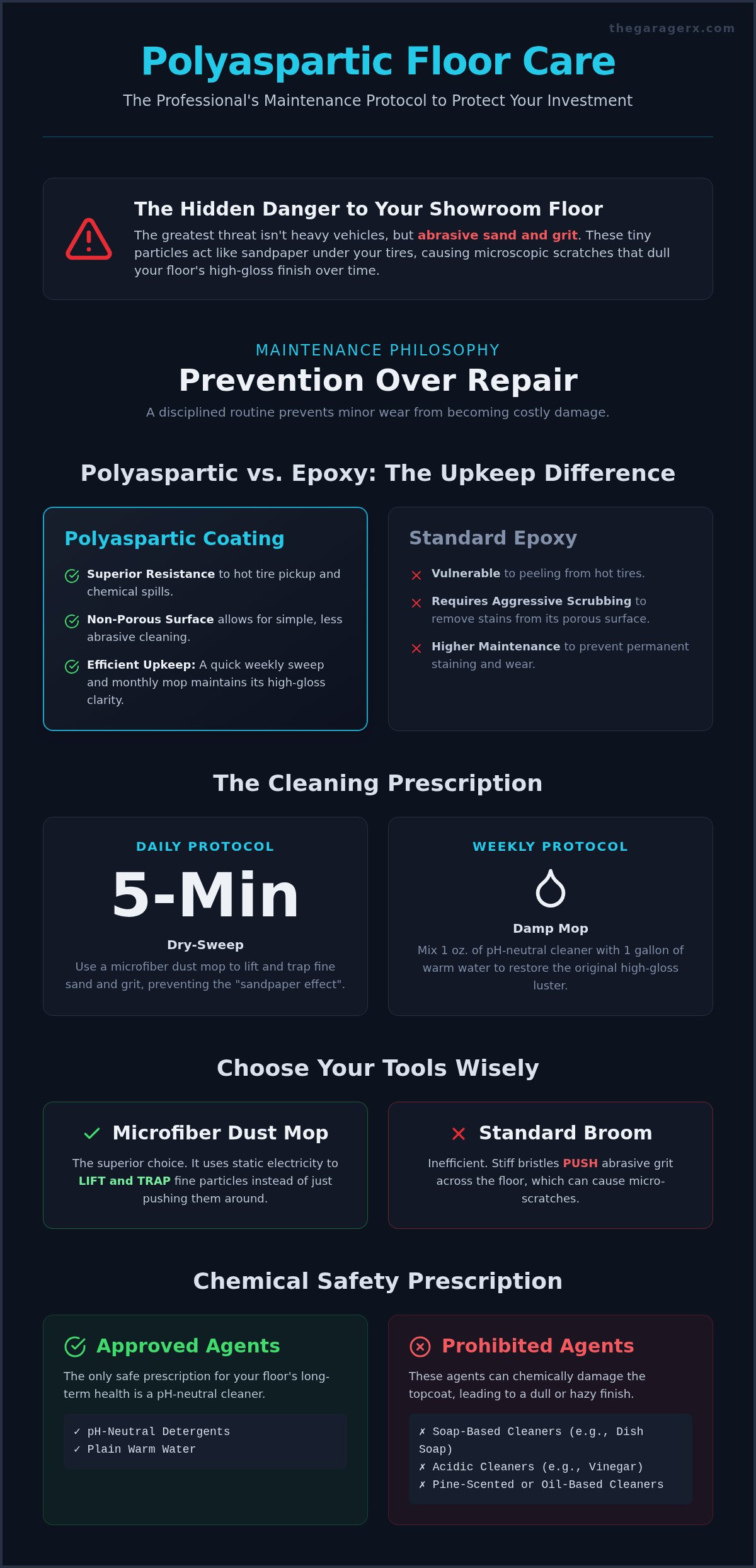
A high-performance floor installation is a professional intervention for your home. It transitions your garage from a cluttered, stained space into a showroom-grade environment. While these surfaces are engineered for extreme durability, they aren't indestructible. Adopting a diagnostic mindset allows you to spot microscopic issues before they escalate into structural damage. Perform a visual check-up every month. Look for areas where the gloss seems dull or where water no longer beads on the surface. These are early indicators that abrasive debris is accumulating. Implementing consistent polyaspartic flooring maintenance tips prevents these minor symptoms from becoming costly repairs. Successful maintenance starts with understanding the unique chemical profile of your floor. What are Polyaspartic Coatings? Technically, they are a subset of polyurethanes designed for rapid curing and high-build protection. This chemical structure makes them far more resilient than standard epoxy, but it also dictates a specific maintenance rhythm.
Polyaspartic vs. Epoxy Upkeep Requirements
Polyaspartic systems offer superior resistance to hot tire pickup, a common failure point for DIY epoxy where heat from vehicle tires peels the coating away. Your polyaspartic floor finish handles caustic automotive fluids and road salts with much higher efficiency. Epoxy often requires aggressive scrubbing to remove stains, but polyaspartic's non-porous surface allows for a simpler, less abrasive routine. Plan for a quick weekly sweep and a monthly damp mop to maintain the high-gloss clarity. This efficiency is the hallmark of a professional-grade system.
The South Florida Factor: Sand and Salt Air
Living in Davie presents specific environmental challenges that national maintenance guides often ignore. The primary enemy is coral sand tracked in from local driveways. These tiny, jagged particles act like 80-grit sandpaper under the weight of a vehicle. Constant friction can eventually etch the topcoat if left unmanaged. Salt air crystallization is another factor. In South Florida, salt particles can settle on the floor, attracting moisture and creating a hazy film. During the rainy season, increased humidity means your floor might stay damp longer after cleaning. Adjust your routine by increasing sweeping frequency when the afternoon storms begin to track more debris inside. Use a microfiber dust mop to lift these particles rather than just pushing them around. This simple intervention preserves the just-installed look regardless of the weather outside.
The Daily and Weekly Cleaning Prescription
Maintaining your high-performance surface requires a disciplined routine. Think of it as a daily prescription for floor health. A quick five-minute sweep prevents the buildup of microscopic debris that can dull your topcoat over time. While the surface is incredibly durable, allowing abrasive sand to sit on the finish leads to unnecessary wear. Consistent use of these polyaspartic flooring maintenance tips ensures your garage remains a clean, organized sanctuary. Plain water is often insufficient for this task. It fails to emulsify the oily films or sticky residues tracked in from Davie streets. You need a methodical approach to lift these contaminants without damaging the chemical bond of the coating.
Standard brooms often fail because their stiff bristles skip over the textured surface of a polyaspartic coating. This texture is essential for slip resistance, but it can trap dust in its low points. Microfiber dust mops are the superior choice. They use static electricity to lift and hold onto fine particles rather than just pushing them around the room. Following a professional concrete maintenance guide highlights why consistent dust management is the most critical step in long-term surface preservation.
Dust Management: The Dry-Sweep Protocol
Efficiency is the goal for daily care. Use a 24-inch or 36-inch microfiber dust mop to cover large areas quickly. Start from the back corners of the garage and work your way toward the main door. Maintain a continuous path to ensure you don't miss any sections of the floor. Shake out the pad outside or replace it entirely once it becomes saturated with gray dust. This simple intervention prevents the sandpaper effect caused by coral sand and grit.
The Weekly Damp Mop: Preserving the Shine
Once a week, perform a deeper cleaning to restore the floor's original luster. Mix one gallon of warm water with one ounce of a pH-neutral detergent. Avoid soap-based cleaners like dish soap or pine-scented oils. These products leave a sticky residue that actually attracts more dirt and creates a cloudy appearance over time. Use the double bucket method for the best results. One bucket holds your cleaning solution, while the second contains clean water for rinsing your mop. This prevents you from spreading dirty water back onto your pristine floor. If you're unsure about which products are safe for your specific installation, you can always consult with a professional for a tailored maintenance recommendation. A clean floor is the foundation of a high-end, functional garage environment.
Chemical Safety: Approved vs. Prohibited Agents
Your polyaspartic floor finish is engineered to repel the harshest automotive chemicals. However, even industrial-grade coatings have limits. Understanding these thresholds is a vital part of your polyaspartic flooring maintenance tips. Most common household spills fall into a 24-hour Danger Zone. If you wipe them up within this window, the surface remains pristine. Beyond that, certain agents can begin to soften the topcoat or cause localized staining. Adhering to hard-surface floor care best practices means moving beyond general cleaning and into specific chemical management. Many homeowners mistakenly reach for vinegar or citrus-based cleaners because they are labeled as natural. We prescribe against these solutions. Their high acidity etches the high-gloss finish, eventually turning it dull and cloudy. Stick to pH-neutral cleaners to maintain the chemical integrity of the bond.
The "Never Use" List for Polyaspartic
High-pH chemicals like bleach and ammonia are too aggressive for resinous flooring. They can cause the topcoat to cloud or yellow prematurely. Mechanical abrasion is another significant risk. Never use steel wool or scouring pads to remove stubborn spots. These tools create permanent microscopic scratches that trap dirt and destroy the showroom look. Similarly, avoid heavy-duty commercial degreasers unless they are specifically labeled as safe for polyaspartic surfaces. Often, these products are too strong and can chemically mar the finish if left to sit for more than a few minutes.
Managing Automotive Fluid Spills
Brake fluid and battery acid represent the highest tier of chemical risk. These substances demand a 12-hour window for safe removal. If you discover a heavy oil leak, don't reach for a mop immediately. Use sawdust or kitty litter to absorb the bulk of the fluid first. This prevents you from spreading the contaminant across a larger surface area. For the final wipe, use a small amount of isopropyl alcohol on a clean cloth. This ensures a residue-free finish without the need for aggressive scrubbing. This targeted spot-cleaning technique preserves the surface without risking the structural health of the coating. Keeping your garage organized with proper storage solutions also makes it easier to spot these leaks before they become permanent problems.
The Seasonal Deep-Clean Checklist
Quarterly interventions are a clinical necessity for maintaining a high-performance garage environment. Every three months, clear the floor entirely to perform a comprehensive diagnostic cleaning. This involves moving vehicles and shifting any portable storage units to expose the full surface area. In Davie, the combination of high humidity and salt air creates a sticky film that a standard weekly mop might miss. By clearing the space, you can address the hidden accumulation of grime in corners and along the perimeter. Implementing these seasonal polyaspartic flooring maintenance tips ensures that microscopic contaminants don't have the chance to bond permanently with your topcoat. A deep clean isn't just about aesthetics. It's a preventive measure that preserves the structural integrity of your investment.
Power Washing Guidelines for Davie Homeowners
Pressure washing offers a decisive resolution for removing stubborn South Florida grit. However, technical precision is required to avoid damaging the concrete bond. Stick to a prescribed limit of 1500 to 2000 PSI. Exceeding this range risks etching the finish or creating delamination points in the underlying substrate. Use a 40-degree wide spray nozzle rather than a concentrated jet. This wide pattern allows you to flush out salt deposits and driveway sand safely. Focus your efforts on the threshold where the garage meets the driveway, as this area experiences the highest concentration of environmental stress. Always rinse from the back of the room toward the exit to ensure all debris is fully evacuated.
The Squeegee Method: A Dry Floor is a Safe Floor
Removing standing water quickly is vital during high-humidity summers. Use a foam-bladed squeegee for this task. Unlike standard rubber blades, foam conforms to the non-slip texture of your floor and pulls water out of the low points of the finish. Push the water toward the driveway using long, controlled strokes. This ergonomic approach prevents physical strain while ensuring maximum water recovery. Pay close attention to the base of your custom garage cabinets. Ensuring no standing water remains near your storage systems prevents moisture damage and maintains the organized, high-end look of your installation. A dry floor is the final step in a successful seasonal intervention.
If your seasonal inspection reveals deep scratches or dull patches that cleaning can't fix, you need an expert opinion. Schedule a professional floor check-up with our team to keep your garage in showroom condition.
Professional Interventions and Long-Term Protection
Your garage floor is a high-performance asset that requires a specialized wellness plan. While your daily and weekly routines handle the symptoms of environmental stress, periodic professional check-ups ensure the underlying system remains healthy. We recommend a formal diagnostic assessment every few years to evaluate the topcoat's integrity. These interventions allow us to identify areas of heavy traffic wear before they compromise the concrete bond. Professional care extends the life of your installation far beyond the standard expectations of DIY alternatives. By integrating expert polyaspartic flooring maintenance tips with professional oversight, you ensure your space remains a high-value asset for your Davie home.
A "Clear Floor Policy" is the most effective prescription for long-term durability. When items sit directly on the resinous surface, they trap moisture and provide opportunities for mechanical damage. Dragging heavy bins or lawn equipment creates micro-abrasions that dull the finish over time. Shifting your focus to vertical and overhead space isn't just about tidiness; it's a strategic move to protect your floor's showroom luster. A high-end garage should function like a clinical environment: clean, orderly, and free of ground-level obstructions.
Protecting the Floor via Organization
Implementing garage wall organization systems is a decisive step in floor preservation. By lifting tools and sports gear onto slatwalls, you eliminate the friction caused by sliding items across the coating. Off-the-floor cabinets are another essential component. They provide easy cleaning access to the perimeter of the room, preventing the buildup of salt and sand in hard-to-reach corners. For items used only once a year, we prescribe overhead garage storage racks in Miami. These systems reclaim your floor space and ensure that only your vehicles ever touch the polyaspartic surface.
Signs You Need a Professional Buff and Coat
What should you expect as your floor ages? After a decade of use, you might notice slight dulling in the paths where your tires consistently travel. It's vital to distinguish between surface dulling and actual material loss. Surface dulling is often just a collection of microscopic scratches in the topcoat. A professional buff and coat refresh can restore the original high-gloss shine without requiring a full re-installation. This process involves a light mechanical abrasion followed by a fresh application of industrial-grade polyaspartic material. In the South Florida real estate market, maintaining a pristine garage floor yields significantly higher property value. It signals to potential buyers that the home has been meticulously cared for by a disciplined owner.
Securing the Long-Term Health of Your Garage Floor
Maintaining a high-end garage requires more than just occasional effort; it demands a disciplined aftercare protocol. You've learned that consistent dust management and the use of pH-neutral cleaners are the most effective interventions for preserving your topcoat. By integrating vertical organization into your spatial strategy, you eliminate the mechanical friction that leads to premature wear. These polyaspartic flooring maintenance tips provide a clear roadmap to keep your installation in showroom condition for decades.
The Garage RX serves homeowners across Davie, Miami-Dade, and Palm Beach Counties with professional one-day installations. Our expert organization consultants specialize in diagnosing spatial chaos and prescribing durable, high-performance solutions. Don't let environmental stress compromise your home's value or functionality. Prescribe a new look for your garage with a professional consultation from The Garage RX and enjoy the relief of a perfectly ordered environment.
Frequently Asked Questions
How soon can I clean my new polyaspartic floor after installation?
You can walk on your new floor in as little as 4 to 6 hours after a professional installation. Wait a full 24 hours before returning vehicles to the space. While the surface cures rapidly, we recommend waiting 48 hours before performing any light damp mopping. For heavy scrubbing or using detergent, wait at least seven days to ensure the chemical bond has reached full industrial-grade strength.
What is the best pH-neutral cleaner for polyaspartic flooring?
The best pH-neutral cleaners include Simple Green Pro HD, Bona Hard-Surface Floor Cleaner, or Method Squirt + Mop. These products effectively emulsify dirt without leaving a sticky film or etching the topcoat. Avoid any solutions containing vinegar, bleach, or high concentrations of ammonia. Following these polyaspartic flooring maintenance tips ensures the high-gloss luster remains clear. Always rinse with clean water after mopping to remove any remaining detergent residue.
Can I use a steam mop on my polyaspartic garage floor?
We prescribe against using steam mops on resinous coatings. The intense heat and concentrated moisture can potentially compromise the bond between the coating and the concrete substrate. Over time, this thermal stress leads to clouding or localized delamination. Stick to the traditional microfiber mop and warm water method. It's safer, more efficient, and preserves the structural integrity of your floor without the risks associated with high-temperature steam.
How do I remove black tire marks from my garage floor?
Black tire marks occur when plasticizers from warm tires migrate into the surface. Remove them promptly using a soft cloth dampened with a small amount of isopropyl alcohol or a mild degreaser. Gently rub the area until the mark lifts, then rinse the spot with clean water. To prevent these marks in the future, ensure your garage is properly ventilated and avoid hard braking on the floor surface whenever possible.
Is it safe to use a pressure washer on a polyaspartic coating?
It is safe to use a pressure washer if you follow strict technical guidelines. Never exceed 2000 PSI and always utilize a 40-degree wide spray tip. This prevents the water from focusing too much energy on a single point, which could damage the finish. Keep the wand moving and maintain a distance of at least 12 inches from the surface. This method is particularly effective for flushing out coral sand from Davie driveways.
Will road salt from northern trips damage my Florida garage floor?
Road salt won't chemically damage the polyaspartic material, but it can leave a white, hazy residue if left to dry. Salt air in South Florida combined with northern road salt creates a highly abrasive environment. Rinse your vehicle and the floor immediately after returning to Davie from northern trips. This simple intervention prevents salt crystals from scratching the high-gloss finish when you drive across the surface.
How often should I deep-clean my polyaspartic floor in Davie?
We recommend a thorough deep-clean every three months. Davie's intense humidity and frequent afternoon storms track significant amounts of grit and moisture into the garage. A seasonal intervention allows you to clear the floor and address hidden grime along the perimeter. This frequency is essential for maintaining the non-slip texture and ensuring that environmental contaminants don't have time to bond with the surface or dull the clarity of the finish.
Does polyaspartic flooring require waxing or buffing?
Polyaspartic coatings never require waxing or residential buffing. These floors are engineered to maintain their high-gloss appearance through simple cleaning protocols. Applying wax actually creates a maintenance problem because the wax will eventually yellow or peel, requiring a difficult stripping process. If the floor begins to look dull after a decade of heavy use, contact us for a professional diagnostic check to see if a topcoat refresh is necessary.