

Your garage floor is likely suffering from a condition common to South Florida: environmental fatigue. Between the relentless Davie humidity and tires that reach scorching temperatures on the asphalt, standard coatings often fail within a few seasons. You've probably noticed the symptoms already, like unsightly peeling under your car or a yellowing tint where the sun hits the threshold. When homeowners ask is polyaspartic better than epoxy, they're usually looking for a permanent cure rather than a temporary patch.
It's frustrating to invest time and money into a space only to watch the finish bubble and lift due to moisture and heat. You want a surface that remains pristine, resists chemicals, and doesn't require a week of downtime that leaves your cars in the driveway. This guide provides a professional diagnosis of both materials to help you choose the right intervention for your home. You'll discover why polyaspartic is the superior prescription for our unique climate. We will compare durability, UV resistance, and the specific chemical advantages that allow for a one-day installation. It's time to move past the cycle of floor failure and secure a high-end, organized environment that lasts.
Key Takeaways
- Understand the chemical differences between standard thermosetting epoxy resins and high-performance, flexible polyaspartic coatings.
- Discover why the question is polyaspartic better than epoxy depends on South Florida’s specific environmental stressors like high UV exposure and hot tire pickup.
- Learn how professional diamond grinding and moisture testing provide a permanent cure for the peeling and bubbling caused by Davie humidity.
- Contrast the installation timelines to see how a rapid one-day application can restore your garage functionality without a week of downtime.
- Evaluate the long-term ROI of a floor coating engineered to maintain its finish and structural integrity for up to 20 years in a coastal climate.
The Chemistry of a Cure: What Are Polyaspartic and Epoxy Coatings?
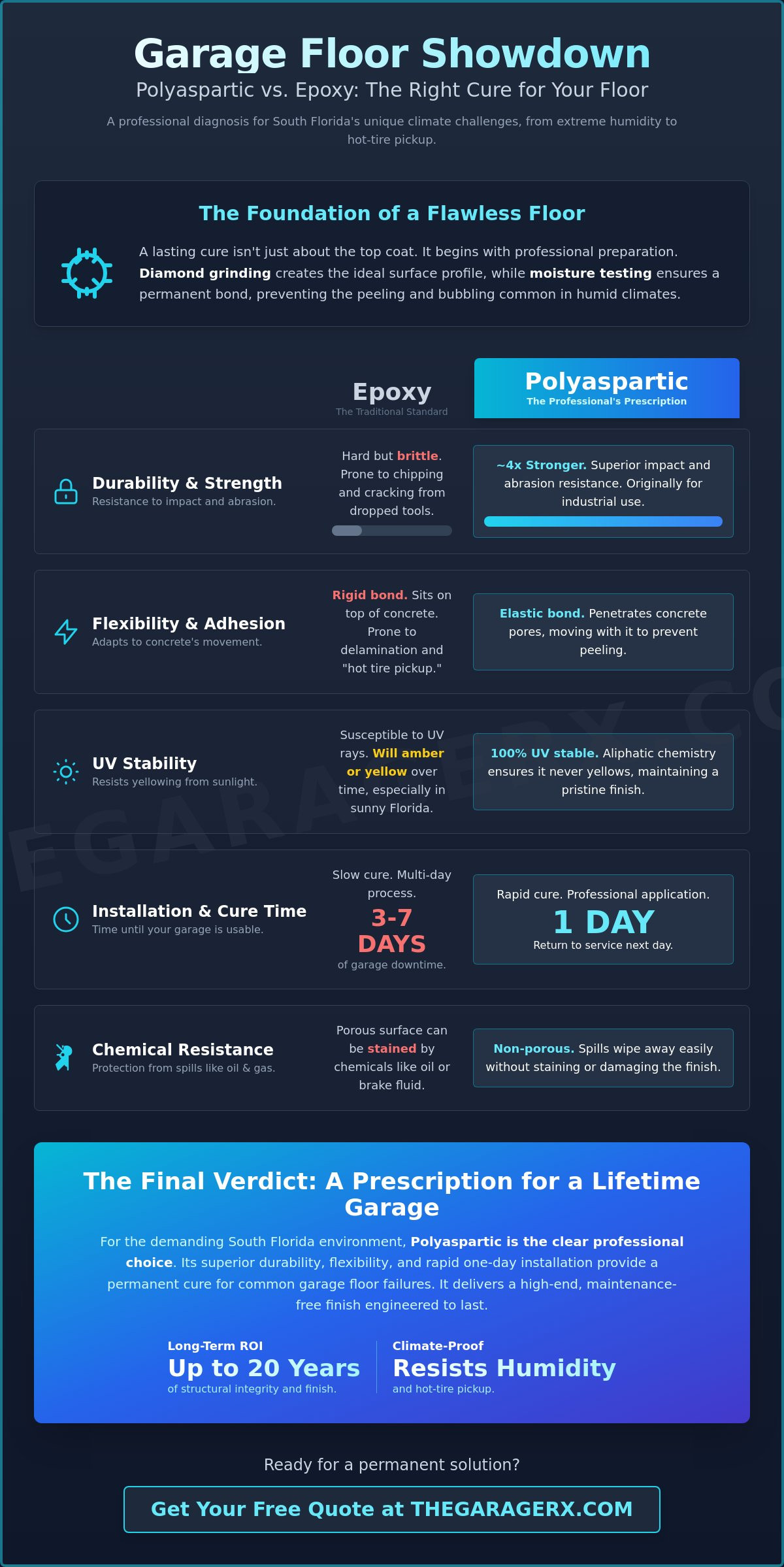
To provide a proper diagnosis for your garage floor, we must first examine the molecular structure of the materials involved. Understanding the science behind the surface helps clarify why certain coatings fail while others thrive. Epoxy is a thermosetting resin created by mixing a resin with a hardener. This chemical reaction results in a hard, thick, and rigid surface. While it's incredibly strong in a controlled environment, it lacks the ability to adapt to changing conditions.
Polyaspartic is a high-performance aliphatic polyurea. Unlike the stiff nature of resin, this material is engineered for enhanced flexibility. The fundamental difference between these two options is the nature of their bond. Epoxy creates a rigid bond, acting like a hard shell over the concrete. Polyaspartic creates an elastic bond that allows the coating to move in harmony with the slab below. In the professional diagnosis of concrete longevity, this "flex" is the deciding factor. When homeowners ask is polyaspartic better than epoxy, the answer usually lies in how the material handles the natural expansion and contraction of the concrete slab.
The Legacy of Epoxy Resin
Epoxy served as the industrial gold standard for decades. It gained popularity because it's relatively easy to manufacture and has a slow "pot life," meaning it stays liquid in the bucket for a long time. This characteristic made it the go-to choice for DIY kits found in big-box stores. However, that accessibility comes with a trade-off. Traditional epoxy systems are inherently brittle. Because the material is so stiff, it cannot absorb impacts or thermal shifts. Over time, this brittleness leads to hairline cracks and eventual delamination, especially in areas with high traffic.
The Evolution of Polyaspartic Technology
Polyaspartic technology didn't start in the garage. It was originally developed as a high-strength, corrosion-resistant coating for industrial steel applications like bridges and pipelines. Engineers eventually adapted it for concrete floors to provide a level of adhesion that epoxy simply cannot match. Understanding the fundamentals of Polyurea chemistry helps explain why these coatings provide such intense protection. They penetrate deep into the pores of the concrete rather than just sitting on top. This material is "fast-cure" by design, often drying in a matter of hours. This rapid reaction demands extreme professional precision during application, but it results in a floor that is nearly four times stronger than its predecessors. When evaluating if is polyaspartic better than epoxy for a high-end garage, the superior chemical resilience and elastic properties of polyaspartic make it the clear professional choice.
Performance Under Pressure: Comparing Durability and UV Stability
Heavy equipment and dropped tools are the primary stressors for any residential floor. In a diagnostic sense, we measure a material's resilience by how it absorbs energy without fracturing. Traditional epoxy is hard but notoriously brittle. While it creates a thick layer, it lacks the internal structural flexibility to handle high-impact events. If you drop a heavy wrench on an epoxy surface, the rigid bond often shatters, leading to visible chips and cracks that expose the bare concrete below.
Polyaspartic systems offer a different level of protection. As detailed in this technical data sheet for polyaspartic coatings, these materials provide exceptional abrasion resistance and impact strength. When homeowners ask is polyaspartic better than epoxy, they are often looking at the Taber Abrasion test results. These industry metrics prove that polyaspartic coatings lose significantly less mass under friction than standard resins. This means your floor stays smoother for longer, even with heavy vehicle traffic and constant use. Chemical resistance is equally vital. Oil leaks, gasoline spills, and brake fluid can eat through lower-grade coatings. Polyaspartic is essentially non-porous. Chemicals sit on the surface where they can be wiped away, preventing the deep staining that ruins an epoxy finish.
UV Stability: The Battle Against Yellowing
The Florida sun is the primary enemy of standard epoxy polymers. UV radiation triggers a chemical breakdown known as ambering. This process turns a clean grey or white floor into a dingy, yellowish mess over time. It also causes "chalking," where the surface becomes dull and powdery. If your Davie garage has windows or you prefer to work with the door open, UV stability is non-negotiable. Polyaspartic is inherently UV-stable. It maintains its crystal-clear finish and vibrant color for decades because it does not react to sunlight. It's a permanent aesthetic solution for a sun-drenched climate.
Flexibility vs. Brittleness
Concrete is a dynamic material that breathes and moves. It expands in the midday heat and contracts during cooler South Florida nights. Epoxy’s rigid bond is a liability in this environment. When the concrete slab shifts even slightly, a brittle epoxy coating cannot move with it. This tension causes the coating to crack or delaminate from the surface. Polyaspartic acts more like a high-strength elastic skin. It expands and contracts in harmony with the concrete slab. This flexibility ensures the bond remains intact despite thermal shifts or minor settling. If you want to avoid the frustration of a peeling floor, a professional garage floor consultation can help you determine the best path forward for your specific space. Choosing a material that moves with your home is the best way to ensure your is polyaspartic better than epoxy debate ends with a lifetime result.
The South Florida Factor: Humidity and Hot Tire Pickup
South Florida garages face environmental stressors that would cause standard coatings in other regions to fail within months. In Davie, the combination of high humidity and intense ambient heat creates a volatile environment for floor finishes. Most homeowners don't realize that humidity is a chemical hazard during the installation process. Standard epoxy requires a very specific moisture window to cure correctly. If the air is too heavy with water vapor, the resin's chemical reaction is compromised. This results in a finish that looks cloudy or feels tacky long after it should have hardened.
When you ask is polyaspartic better than epoxy, the answer is found in how a material handles these local variables. Polyaspartic is significantly more tolerant of high humidity during application. It creates a dense, cross-linked bond that remains stable even when the dew point is high. It doesn't just sit on the surface; it integrates with the concrete to form a shield that resists the typical failures seen in our tropical climate.
Moisture Vapor Transmission in Florida Concrete
Florida's high water table means your garage slab is constantly under pressure from below. Concrete is a porous material that acts like a sponge, drawing water up through a process called moisture vapor transmission. Traditional epoxy is an impermeable sealer that traps this moisture. As the sun heats the slab, that trapped water turns into vapor, building pressure until it forces the epoxy to bubble and peel away. Professional-grade polyaspartic is engineered to manage this vapor pressure more effectively. Its superior adhesion prevents the delamination that turns a standard garage floor into a maintenance nightmare.
The Cure for Hot Tire Pickup
This is the most frequent diagnosis for floor failure in South Florida. After a long drive on sun-baked asphalt, your tires reach extreme temperatures. When you park, that heat transfers directly into the floor coating. Standard epoxy resins have a low heat-distortion temperature, meaning they soften under your tires. As the tires cool and contract, they bond to the softened floor. When you drive away, the tires literally rip the coating off the concrete, leaving bare spots. Polyaspartic remains chemically stable even under the intense heat of high-performance tires. It doesn't soften or stick, making it the definitive choice for Hot Tire Pickup Resistant Flooring. Choosing a material that resists this thermal transfer is the only way to ensure your floor remains intact for the long term.
Application Realities: Cure Times and Professional Precision
A primary frustration with home improvement projects is the disruption of daily life. Standard epoxy systems require a recovery period that most Davie families find unacceptable. After the final coat is applied, epoxy typically demands three to five days before it can handle the weight of a vehicle. In high-humidity environments, this timeline can stretch even longer. Leaving your cars, tools, and storage items in the driveway for a week is a logistical nightmare and a security risk. Polyaspartic offers a decisive resolution with a total return to service in just 24 hours.
When evaluating if is polyaspartic better than epoxy, the installation timeline is often the deciding factor for busy households. This efficiency is not a result of cutting corners; it is a byproduct of advanced chemical engineering. While epoxy cures through a slow, heat-dependent process, polyaspartic triggers a rapid cross-linking reaction. This allows for a floor that is ready for foot traffic in four to six hours and full vehicle use by the next day. Precision is required to manage this speed, as the material has a pot life of approximately 20 minutes before it hardens in the bucket.
One-Day Installation: The Ultimate Convenience
The professional application process follows a methodical, high-efficiency protocol. It begins with mechanical surface preparation, followed by the base coat, decorative flake broadcast, and a high-solids topcoat. This streamlined workflow ensures your garage is transformed between sunrise and sunset. You can learn more about the specific steps in our One Day Garage Floor Coating guide. This rapid turnaround is the standard for modern, high-end garage environments.
Why DIY Kits Often Fail
Success starts with the "prescription" for proper adhesion: mechanical diamond grinding. Most DIY kits rely on acid etching, which is a superficial chemical wash that fails to open the pores of the concrete slab. Without diamond grinding, the coating merely sits on top of the surface rather than bonding to it. Additionally, DIY products are often water-based or lower-solids epoxies that lack the durability of a 100% solids polyaspartic system. Managing a 20-minute pot life requires a synchronized team and specialized equipment. Attempting this as a weekend project often leads to a botched finish that must be professionally removed. To ensure your floor is installed with clinical precision, schedule a professional diagnostic appointment today.
The Final Verdict: Why Polyaspartic is the Prescription for a Lifetime Garage
When we analyze the long-term health of a South Florida home, the garage floor is often the most neglected structural element. Choosing a coating is a significant decision that impacts your property value and your daily satisfaction. The professional verdict is clear when asking is polyaspartic better than epoxy. For the specific environmental stressors of Davie and the surrounding areas, polyaspartic is the only logical intervention. While epoxy has served as a legacy solution for decades, it simply cannot keep pace with the chemical and thermal demands of our tropical climate.
The long-term ROI of polyaspartic far outweighs the initial investment. A standard epoxy floor in Florida typically reaches the end of its functional life in seven to ten years as it succumbs to UV ambering and moisture pressure. In contrast, a professionally installed polyaspartic system is engineered to endure for 15 to 20 years. You are not just buying a floor; you're securing a permanent cure for the cycle of peeling and repainting. Because polyaspartic is four times stronger than traditional resin, it maintains its structural integrity and aesthetic brilliance long after epoxy would have fractured. This durability makes it the most cost-effective choice for homeowners who value high-end results and zero maintenance.
The Garage RX Difference in Davie
Our approach to garage transformations is rooted in clinical precision and specialized care. We prioritize polyaspartic for all high-traffic residential projects because we refuse to install a product that we know will fail under the Florida sun. We view every garage as a unique case requiring a specific plan of action. Our team focuses on the technical details that general contractors often overlook, from precise moisture testing to advanced mechanical bonding techniques. You can see the results of this disciplined approach by exploring our Polyaspartic Floor Coating Reviews. We believe in transparent communication and delivering a finished environment that functions as beautifully as it looks.
Taking the Next Step Toward Your Garage Transformation
Restoring your garage from a state of disorder to a high-end, organized space begins with a professional site diagnostic. During this consultation, we assess the condition of your concrete, measure moisture levels, and help you select a flake profile that complements your home's aesthetic. We handle the heavy lifting, ensuring a tidy and efficient installation that respects your time and property. Don't settle for a temporary patch that will eventually bubble and lift. Invest in a solution that is engineered for the heat, humidity, and heavy use of South Florida. When you are ready to experience the relief of a transformed space, contact The Garage RX to schedule your expert consultation. It's time to give your garage the specialized treatment it deserves.
Secure a Permanent Cure for Your Garage Floor
South Florida's climate demands a flooring system that can withstand relentless UV exposure and intense humidity. We have examined how standard epoxy often fails due to brittleness and hot tire pickup, while polyaspartic provides the flexible, heat-resistant shield your home deserves. When you analyze the technical data, the answer to whether is polyaspartic better than epoxy becomes clear. You need a material that integrates with your concrete rather than one that simply sits on the surface waiting to peel.
Our team utilizes industrial-grade 100% solids materials and specialized diamond grinding to ensure every installation meets our disciplined standards for quality. We understand the specific humidity challenges of Davie and provide a streamlined one-day installation to get your life back to normal quickly. Don't let a failing floor compromise the value of your high-end environment any longer. Take the first step toward a lasting transformation and Get Your Professional Garage Floor Diagnosis from The Garage RX today. Your garage is ready for its recovery.
Frequently Asked Questions
Is polyaspartic more expensive than epoxy?
Polyaspartic typically requires a higher initial investment than standard epoxy. While the material costs are greater, the long-term ROI is superior because you avoid the frequent repairs and replacements associated with brittle resins. When homeowners ask is polyaspartic better than epoxy from a financial standpoint, they must consider the total lifecycle cost. You are paying for a permanent solution that resists the UV damage and hot tire pickup common in South Florida.
Can I apply polyaspartic over an existing epoxy floor?
Applying polyaspartic directly over an existing epoxy floor is not a recommended protocol. For a coating to bond successfully, it requires a mechanical profile that only diamond grinding can provide. We must remove the old, failing material to reach the porous concrete below. This ensures the new system can penetrate deep into the slab, creating a permanent bond that won't delaminate under pressure or high heat.
How long does a polyaspartic garage floor coating last?
A professionally installed polyaspartic floor is engineered to last between 15 and 20 years in the South Florida climate. This is significantly longer than the 7 to 10 year lifespan typical of standard epoxy systems. Because the material is UV-stable and flexible, it doesn't suffer from the ambering or cracking that degrades other coatings. It remains a high-performance surface that looks as clean as the day it was installed.
Is polyaspartic flooring slippery when wet?
Polyaspartic floors are not inherently more slippery than other smooth surfaces, especially when installed with a decorative flake broadcast. We include a slip-resistant additive in the final topcoat to provide essential traction. This creates a safe, textured environment that maintains its grip even when wet from Florida rain or a routine cleaning. It's a critical safety feature for any functional garage space where safety is a priority.
What happens if my garage floor has cracks before the coating?
Existing cracks and pits are treated as part of the initial diagnostic and preparation phase. We utilize high-strength polyurea fillers to repair structural imperfections before the base coat is applied. This creates a seamless, level foundation that prevents moisture from infiltrating the slab. Once the coating is applied, the previous damage is completely invisible, resulting in a flawless and structurally sound surface that resists further cracking.
Can I park my car on the new floor the same day it is installed?
You cannot park your vehicle on the floor the same day it is installed. While the material cures rapidly, it requires 24 hours to reach the hardness necessary to handle the weight and heat of a car. You can typically walk on the surface in four to six hours after the final topcoat. When deciding is polyaspartic better than epoxy, this rapid 24-hour return to service is a major advantage for busy households.
Does polyaspartic have a strong odor during installation?
Modern polyaspartic coatings are formulated with low VOC levels, resulting in a much milder odor than traditional solvent-based epoxies. Any slight scent typically dissipates within a few hours as the material reaches its initial cure. Our professional application team ensures proper ventilation throughout the process. This allows you to return to your home comfortably without the lingering chemical fumes often associated with lower-grade or DIY floor treatments.
How do I clean and maintain a polyaspartic floor?
Maintaining your new floor is a simple, low-effort process. Because the surface is non-porous and chemical-resistant, dirt and spills stay on top where they can be easily wiped away. We recommend a routine cleaning with a soft-bristle broom and an occasional mop with a pH-neutral cleaner. This keeps the finish looking pristine and prevents the buildup of road salt or oil that can dull the appearance of lesser coatings over time.